



Article
British Normandy Memorial Guide
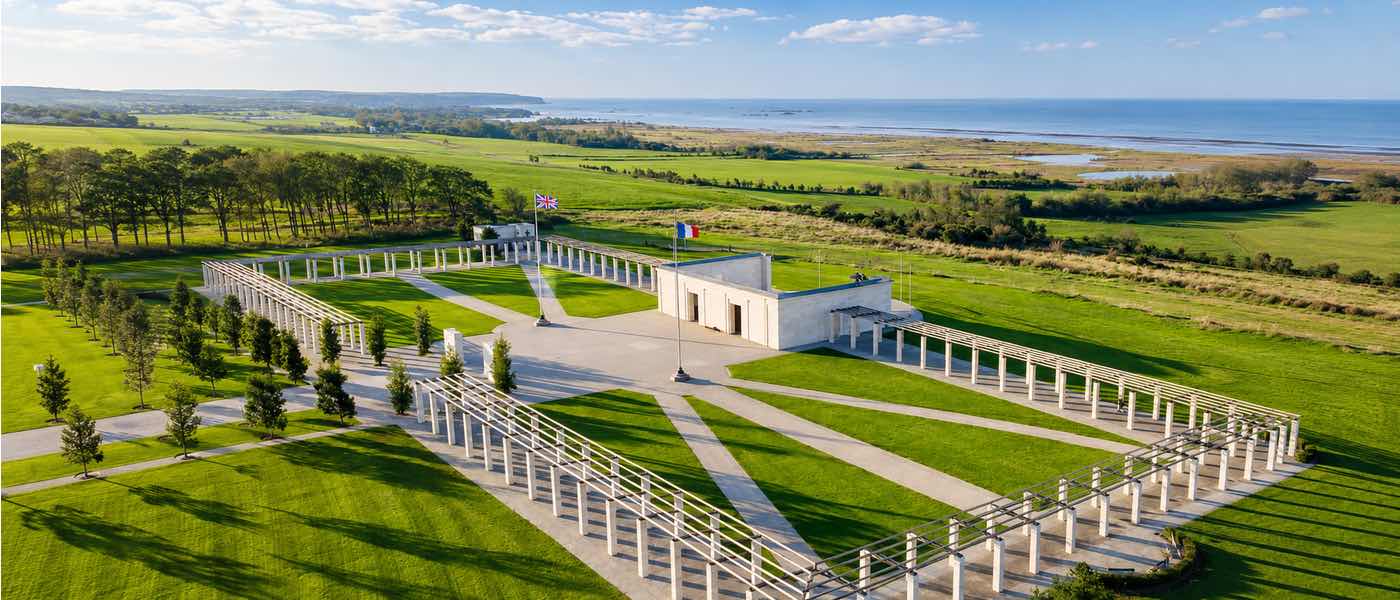
 The British Normandy Memorial, is one of the most moving D-Day sites in Normandy. Located in Ver-sur-Mer, overlooking Gold Beach, the memorial honours the servicemen and women who died under British command during the D-Day landings and the Battle of Normandy.
Opened on 6 June 2021, the memorial records the names of 22,540 individuals who lost their lives in Normandy in the summer of 1944. These include British personnel as well as men and women from more than 30 countries who served in British units.
Visit the British Normandy Memorial in Ver-sur-Mer
Set just inland from the Normandy coast, the memorial offers a peaceful place to pause, reflect and understand the human cost of the campaign that began on D-Day, 6 June 1944. Its position near Gold Beach is especially significant, as this was one of the main landing areas assigned to British forces during Operation Overlord.
The site is designed to be simple, respectful and powerful. As you walk through the memorial, the engraved names make the scale of the sacrifice clear in a very personal way. Each name represents a life lost during the effort to liberate Normandy and, ultimately, Europe.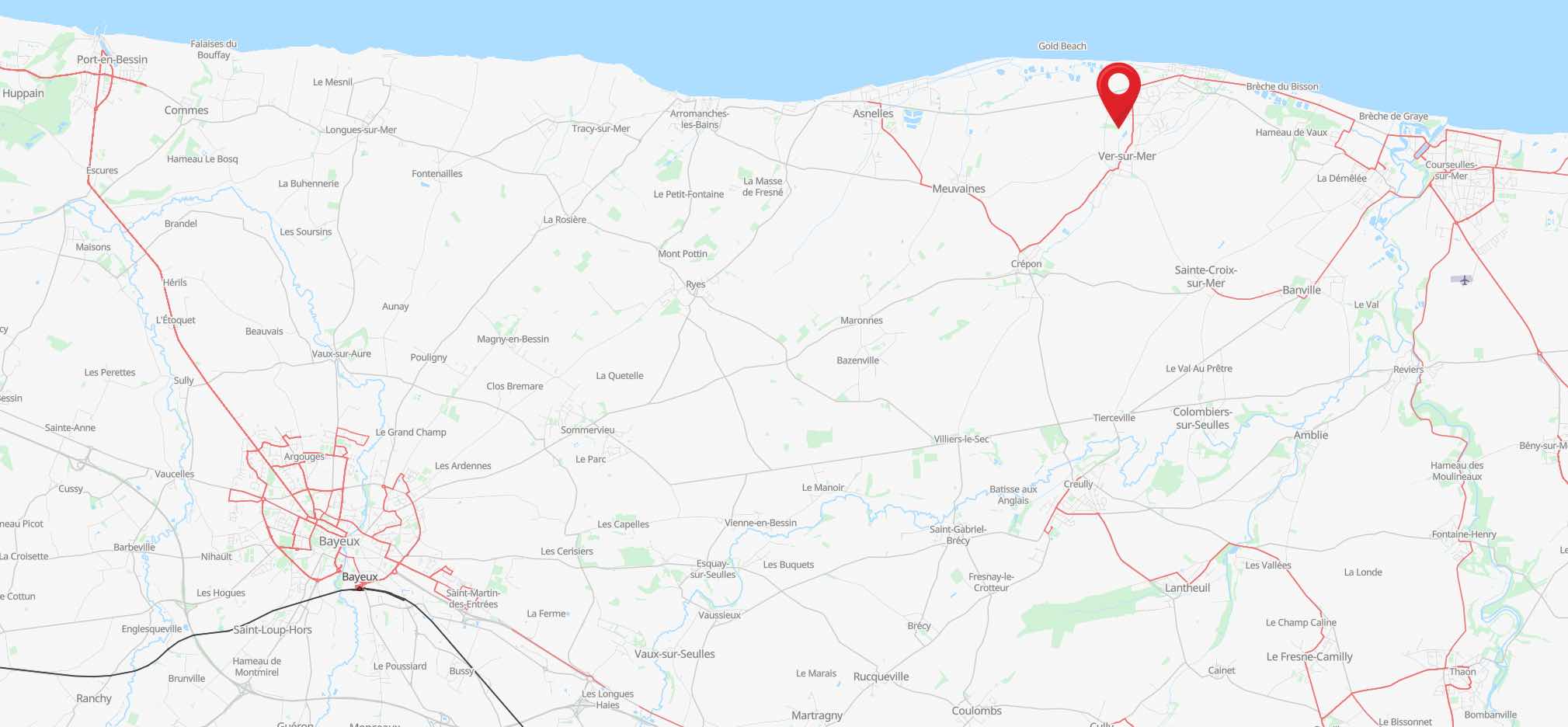
A Place of Remembrance for the British Forces of D-Day
 The British Normandy Memorial is not just a monument; it is a place of remembrance for families, veterans, historians and visitors who want to better understand the events of 1944.
The memorial brings together names that had never previously been listed in one place. This makes it an important stop for anyone following the story of the British and Commonwealth contribution to D-Day and the wider Battle of Normandy.
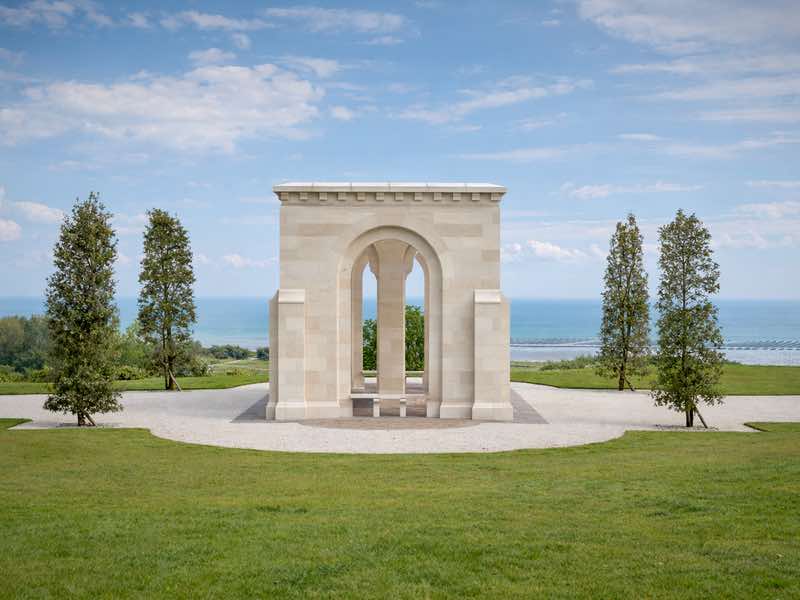
Visitors will also find a French Memorial on the site, dedicated to the civilians who died during the Battle of Normandy. This adds an important wider perspective, reminding visitors that the liberation of France came at a heavy cost for both soldiers and local people.
What to See at the British Normandy Memorial
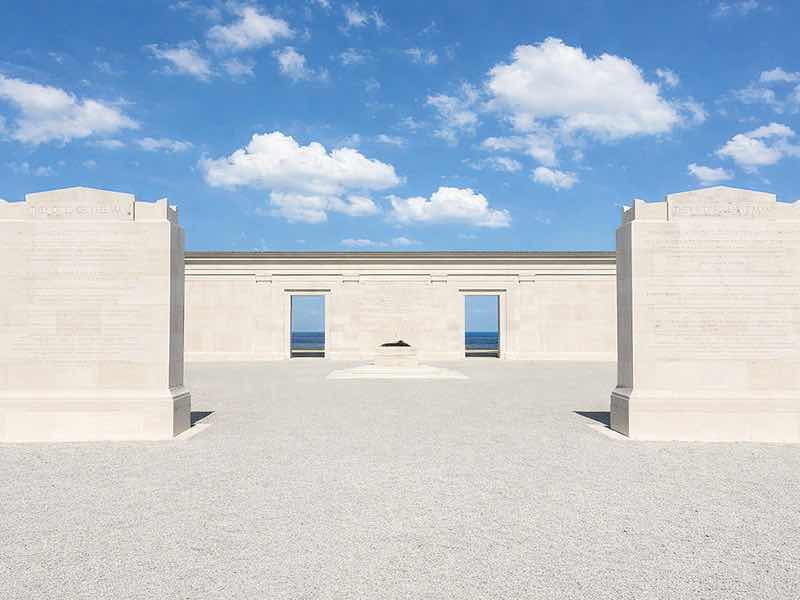 During your visit, take time to walk slowly through the memorial and read the names engraved in stone. The setting is calm and open, with views towards the Normandy coastline and the beaches where history was made.
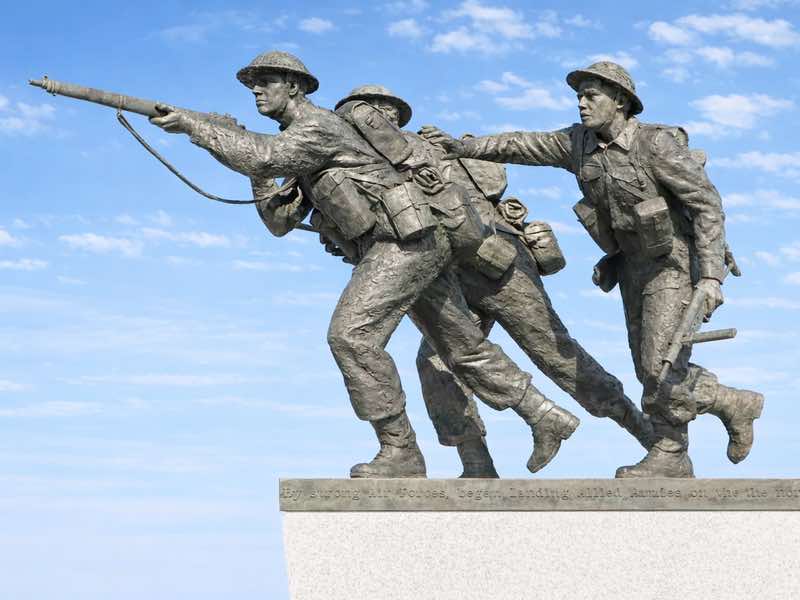
Key things to look out for include the memorial columns, the Roll of Honour, the central sculpture and the surrounding landscape. The layout encourages quiet reflection, while the views towards Gold Beach help connect the memorial to the events of D-Day.
There are visitor facilities on site, including parking, toilets, a picnic area and a walking route from the car park to the memorial. The official visitor information notes that the memorial is around an eight-minute walk from the car park.
Audio Guide Example: A Story from the British Normandy Memorial
One of the most powerful ways to experience the British Normandy Memorial is through the personal stories behind the names carved into its stone.
In our D-Day audio guide, visitors can listen to real stories connected to the men and women remembered at the memorial. These stories help transform the site from a list of names into a deeply human experience, giving context to the lives, service and sacrifice of those who never returned home.
Joseph Kerr Hislop
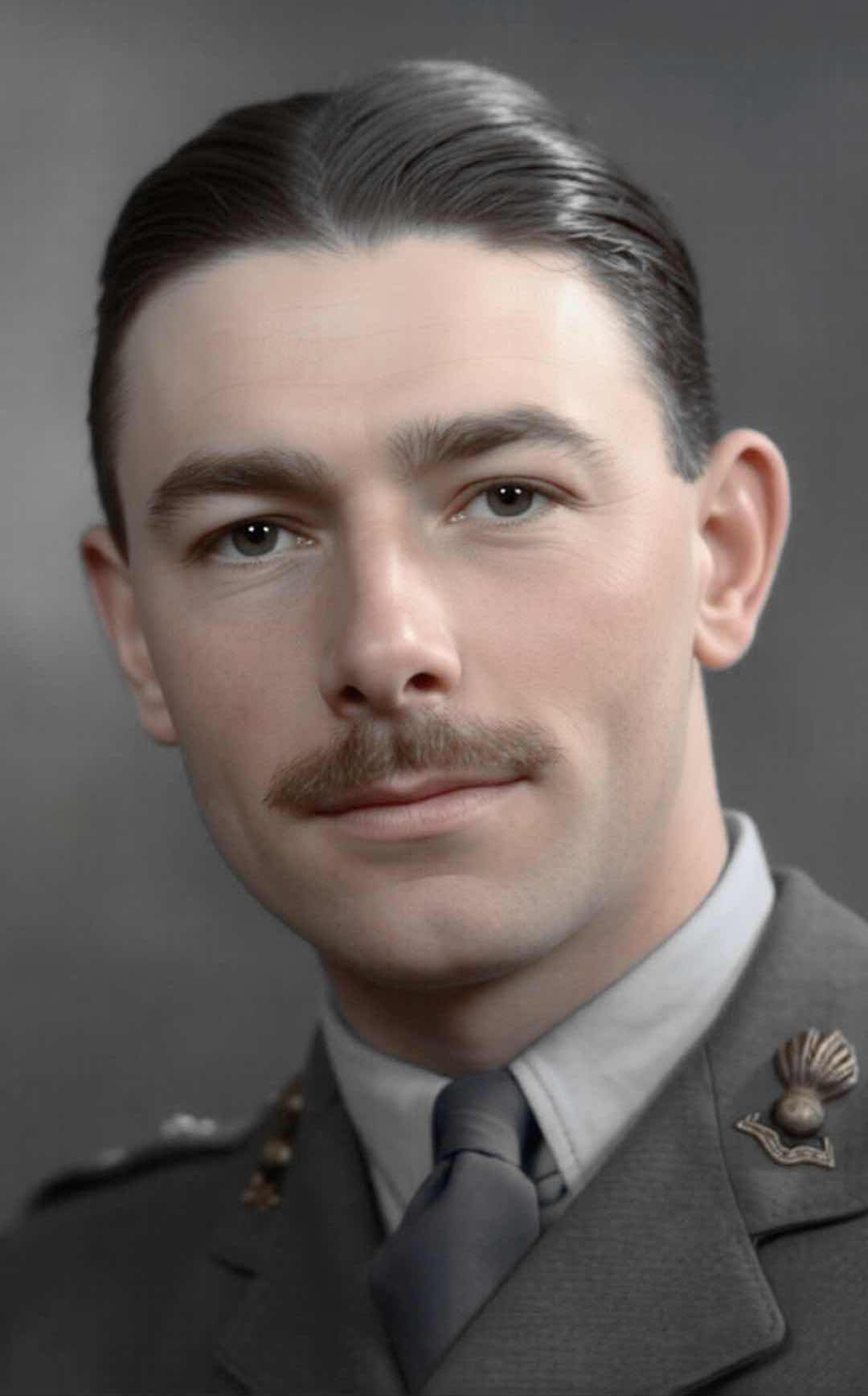 Joseph Kerr Hislop was a British Army officer of the Royal Artillery whose life bridged civilian responsibility and wartime service during the most destructive phase of the Normandy campaign. Born in 1913, he was the son of Albert James Hislop and Amy Hislop, and in adulthood became the husband of Mollie Marian Hislop of Cambridge. By the time of the Second World War he was firmly rooted in civilian life, with family ties and professional obligations that reflected the stability of prewar Britain.
Hislop entered military service as the war expanded, receiving an emergency commission as an officer—initially associated with the infantry before transferring to the Royal Artillery, a path not uncommon among wartime officers. Assigned to the 62nd Anti-Tank Regiment, he trained for a highly technical and dangerous role that required both tactical judgment and personal steadiness under fire. Anti-tank officers were responsible not only for guns and vehicles, but for placing small detachments in exposed positions where German armour was most likely to strike.
In the summer of 1944, Hislop’s regiment deployed to Normandy under I Corps in support of the British and Canadian assault on Caen. On 9 July 1944, the second day of Operation Charnwood, he was killed in action during the fighting that secured the northern half of the city. The battle was fought amid the ruins left by heavy bombing, where shattered streets and collapsed buildings limited movement and made anti-tank work especially hazardous. His death came at a moment when Allied forces were finally achieving one of their principal D-Day objectives.
Lieutenant Hislop was buried at Bayeux War Cemetery, grave II.B.25, among thousands of Commonwealth soldiers who fell in the Normandy campaign. His grave records not only his unit and date of death, but the quieter truths of his life: a son, a husband, and a trained professional whose service ended far from home. Though little survives in public record about his daily life before the war, the surviving details place him firmly among the many educated, family men whose civilian futures were cut short in the effort to bring the war to an end.
Why Visit with a D-Day Audio Guide?
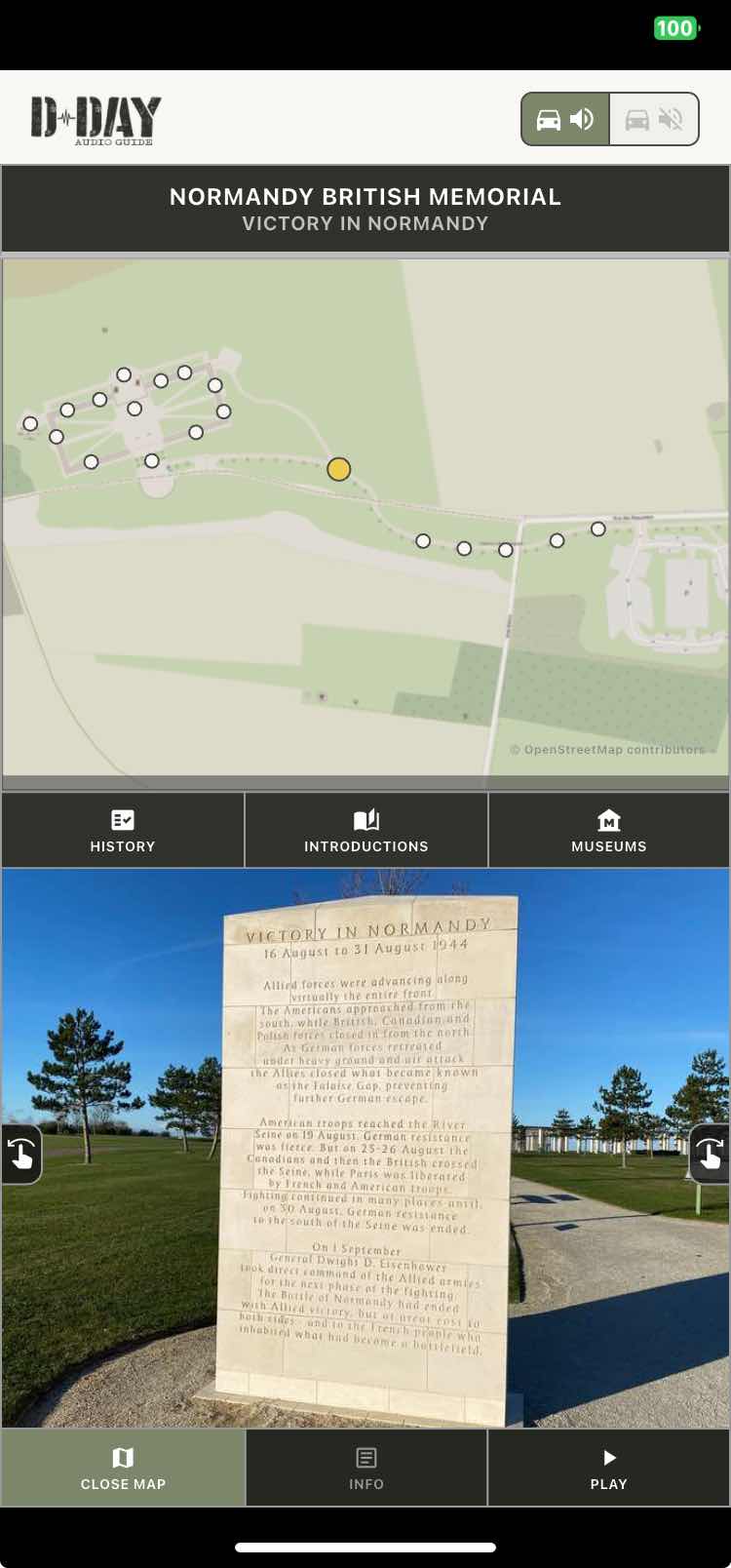 A D-Day audio guide can help bring the British Normandy Memorial to life. While the memorial itself is a deeply emotional place, understanding the wider story behind the names can make your visit even more meaningful.
With an audio guide, you can learn about the planning of D-Day, the British landings on Gold Beach, the Battle of Normandy and the personal stories behind the campaign. It allows you to explore at your own pace while gaining historical context as you move through the site.
This is especially useful if you are visiting several D-Day locations in one day, such as Gold Beach, Arromanches, Bayeux, Juno Beach or the Commonwealth cemeteries nearby.
Planning Your Visit to the British Normandy Memorial
The British Normandy Memorial is located at 13 Avenue Paul Poret, 14114 Ver-sur-Mer, in the Calvados region of Normandy. It is just off the D514 coastal road and is about 25 minutes from both Caen and Bayeux by car.
Allow enough time to walk from the car park, explore the memorial properly and take in the views towards the coast. Many visitors spend around one hour here, although you may want longer if you are using an audio guide or searching for a particular name.
As this is a place of remembrance, it is best visited at a calm pace. Comfortable shoes are recommended, especially if you are combining the memorial with nearby D-Day beaches or museums.
Explore More D-Day Sites Near the Memorial
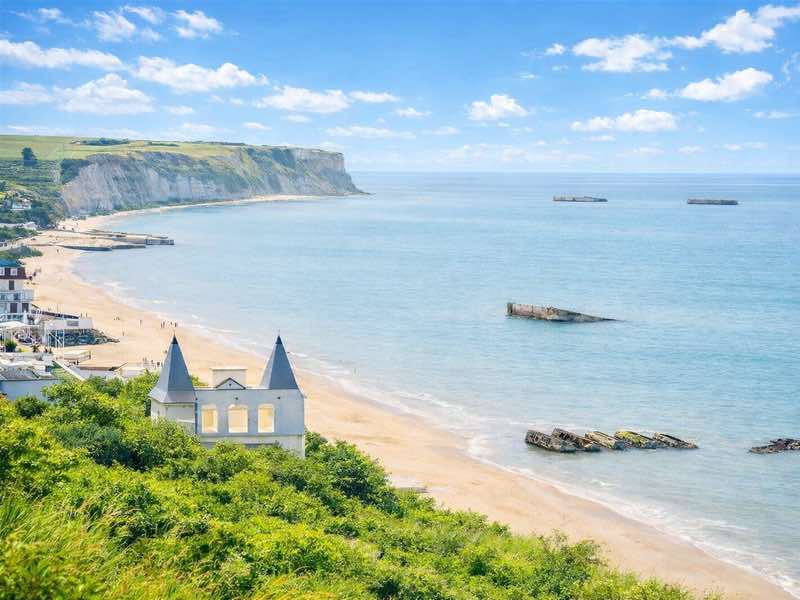 The British Normandy Memorial is ideally placed for exploring other important D-Day sites. Nearby, you can visit Gold Beach, where British troops landed on 6 June 1944, as well as Arromanches, famous for the remains of the Mulberry Harbour.
Bayeux is also within easy reach and makes a useful base for exploring the Normandy landing beaches. From the memorial, you can continue your journey through the story of D-Day by visiting British, Canadian and American sites across the coast.
Whether you are visiting for family history, military history or quiet reflection, the Normandy British Memorial is an essential stop on any D-Day itinerary. A visit here offers a powerful reminder of the courage, sacrifice and human stories behind the liberation of Normandy.