



Article
Explore the Normandy D-Day Beaches With a Self Guided Audio Guide Tour
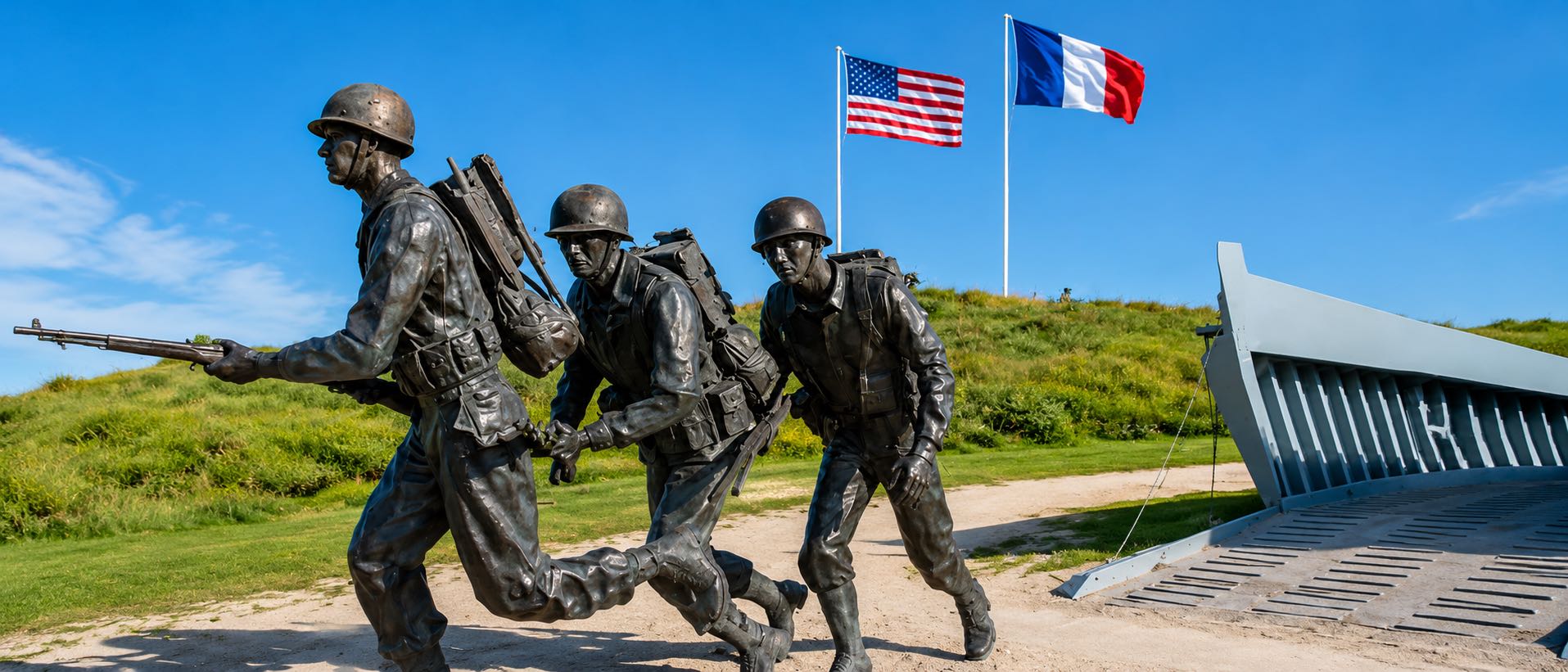
Discover the story of D-Day at your own pace with our D-Day beaches audio guide, designed to help you explore the most important Normandy landing sites across the American, British and Canadian sectors.
The Normandy coastline is not one single battlefield. It is a series of beaches, villages, strongpoints, cemeteries, memorials and inland objectives, each with its own role in the events of 6 June 1944 and the Battle of Normandy that followed.
This audio guide breaks the D-Day story into clear sectors, helping you understand what happened, where it happened, and why each location still matters today.
Utah Beach Sector – American
The Utah Beach sector tells the story of the American landings on the western flank of the invasion area. This part of the battlefield combines airborne operations, beach landings, German defensive positions and the struggle to secure the route inland.
 La Fière
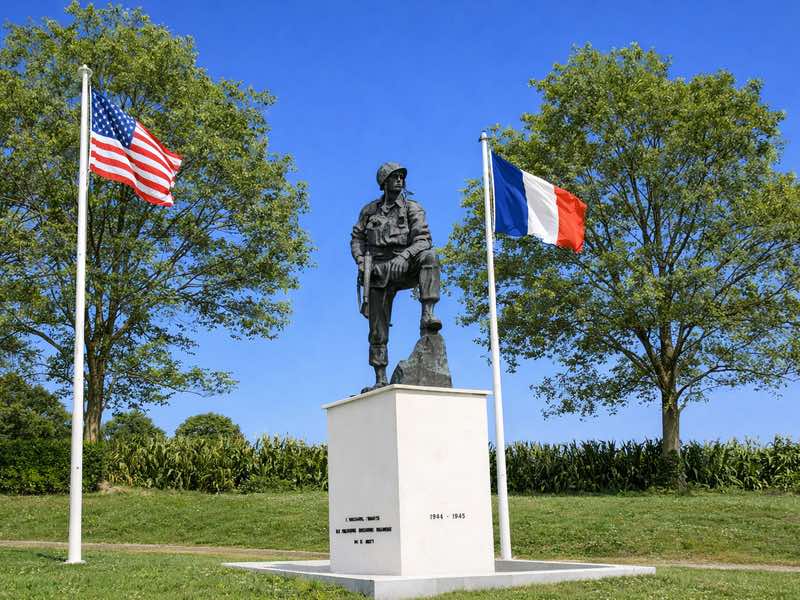
La Fière was one of the most important locations for the American airborne forces. The fighting here centred on control of the causeway and bridge over the Merderet River, a vital route for troops moving inland from Utah Beach.
In the audio guide, La Fière helps explain the role of the paratroopers and why the success of D-Day depended not only on the beach landings, but also on securing key roads, bridges and crossings behind the coast.
 Sainte-Mère-Église
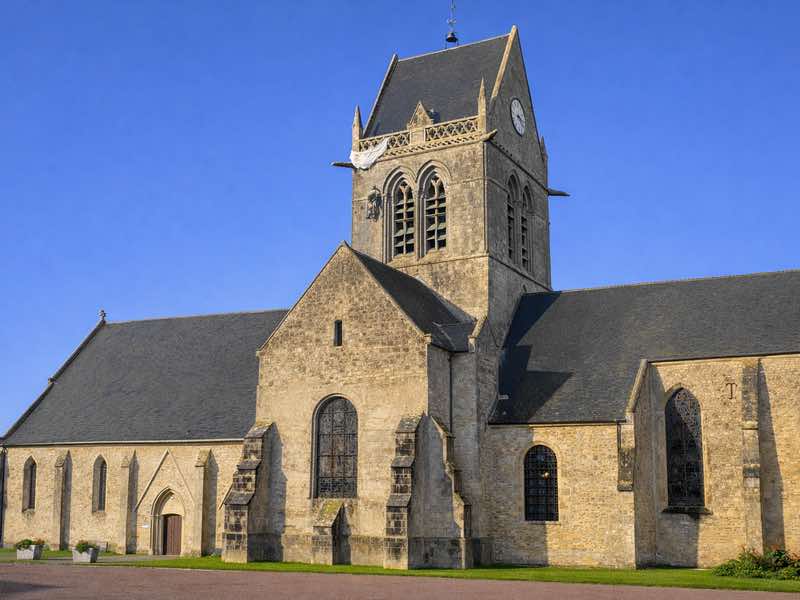
Sainte-Mère-Église is one of the most famous airborne sites in Normandy and an essential stop in the Utah Beach sector. In the early hours of D-Day, American paratroopers landed in and around the town as part of the wider mission to secure key routes behind Utah Beach.
The town is especially known for the story of paratrooper John Steele, whose parachute became caught on the church tower during the drop. Today, Sainte-Mère-Église helps visitors understand the confusion, danger and courage of the airborne operations.
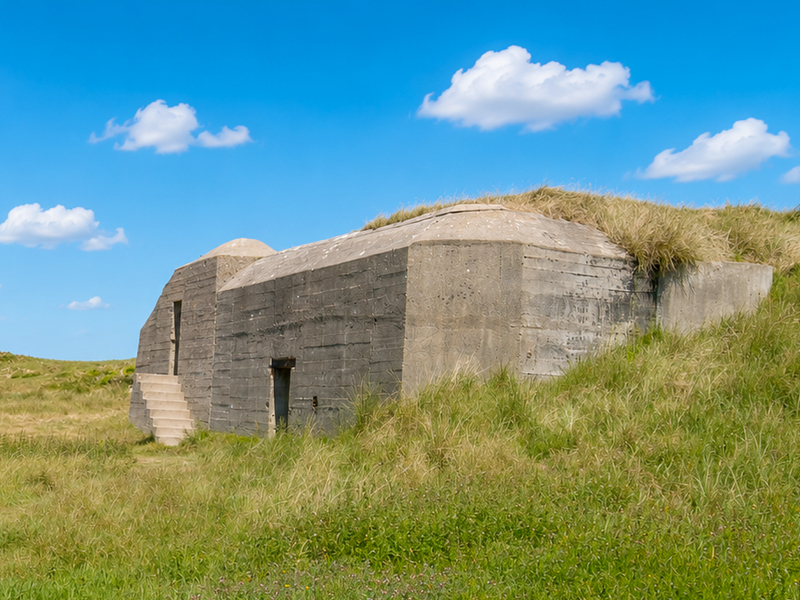 WN8
WN8
WN8 was one of the German defensive positions facing Utah Beach. These strongpoints were built to slow, disrupt or stop the Allied landings.
This stop gives important context to the Atlantic Wall and the defensive system the American forces had to overcome as they came ashore.
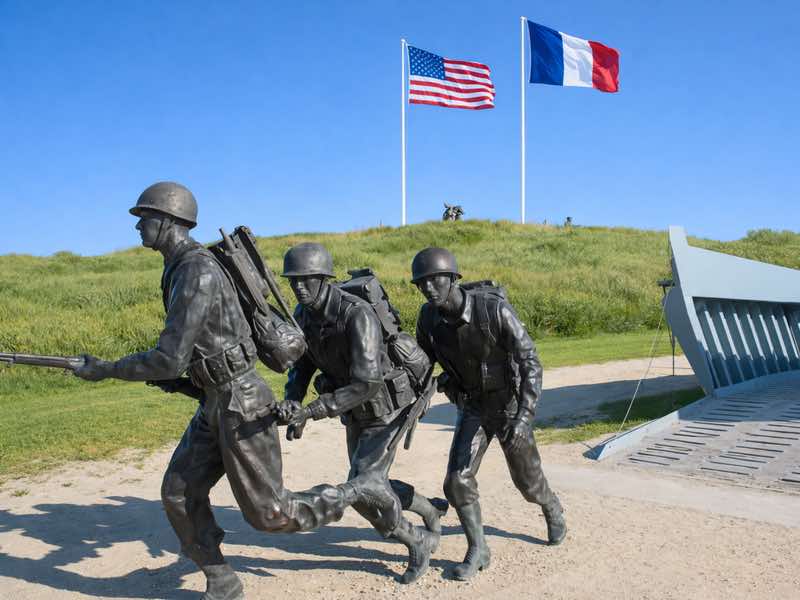 Utah Beach
Utah Beach was the westernmost of the five D-Day landing beaches. American forces landed here with the aim of securing the Cotentin Peninsula and supporting the push towards Cherbourg.
The audio guide explains why the landings at Utah Beach were more successful than at some other sectors, while still showing the scale, risk and complexity of the operation.
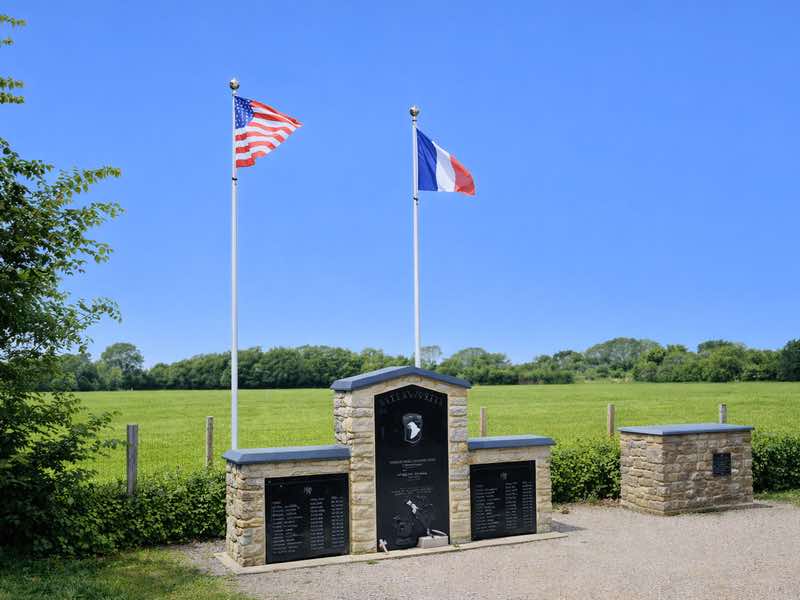 Brécourt Manor
Brécourt Manor is one of the best-known small-unit actions of D-Day. American paratroopers attacked German artillery positions that were threatening the Utah Beach landings.
This location adds powerful context to the airborne mission and shows how individual actions on D-Day could have a major impact on the wider success of the invasion.
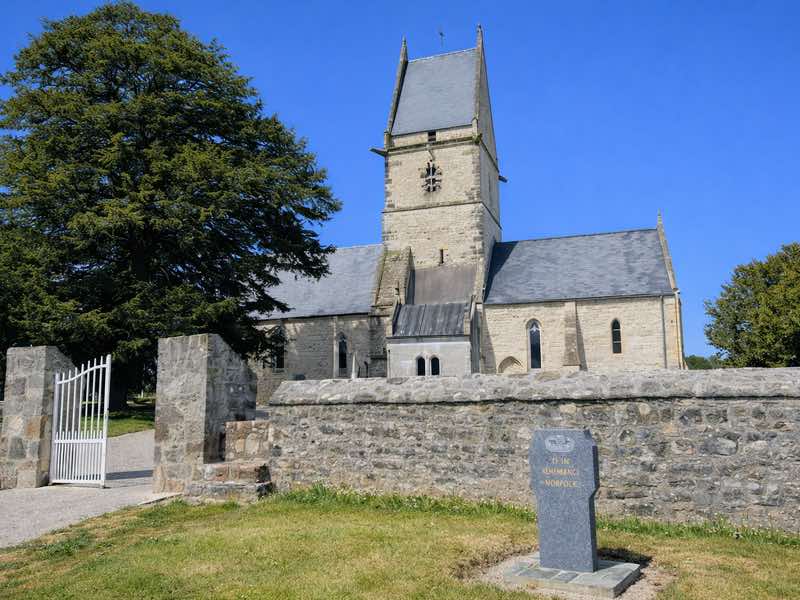 Angoville-au-Plain
Angoville-au-Plain is a moving stop in the Utah sector. The village is closely associated with the story of medics treating both Allied and German wounded during the fighting.
It offers a more human perspective on D-Day, away from the beaches and major objectives, showing the cost of battle for soldiers and civilians alike.
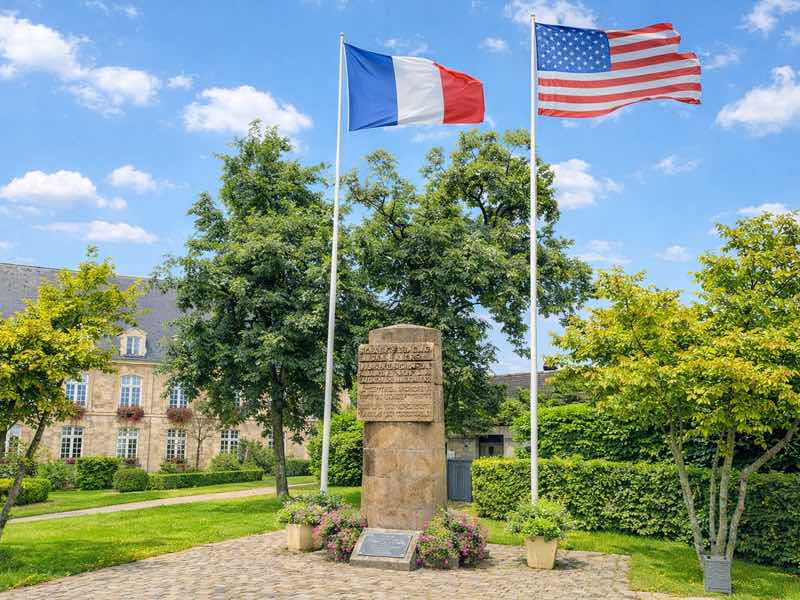 Carentan
Carentan was a crucial objective after D-Day. Capturing the town helped link the Utah and Omaha beachheads, allowing Allied forces to build a stronger and more connected foothold in Normandy.
In the audio guide, Carentan helps explain how the landings developed into a wider battle for control of roads, towns and supply routes.
Omaha Beach Sector – American
The Omaha Beach sector is one of the most powerful and emotional parts of any visit to Normandy. Here, American forces faced fierce resistance, difficult terrain and heavy casualties.
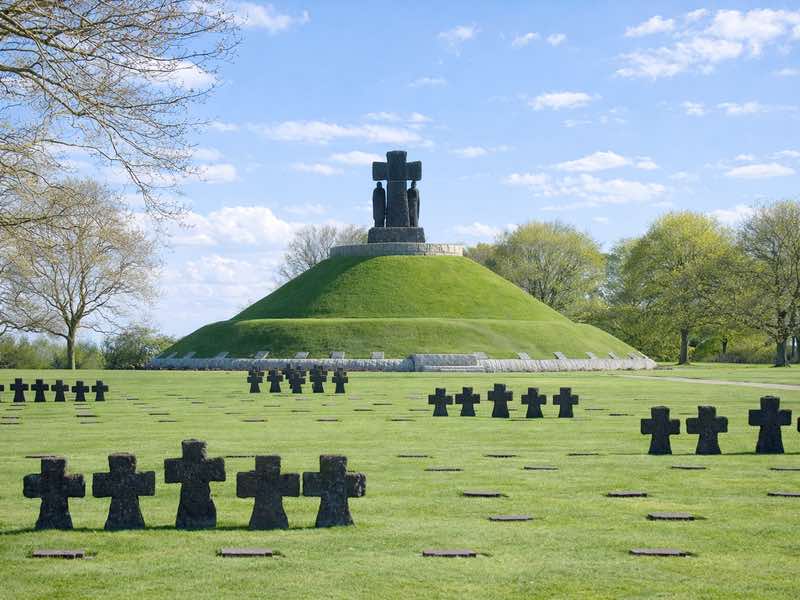 La Cambe German Cemetery
La Cambe German Cemetery offers a sombre and reflective start to the Omaha sector. It gives visitors a wider understanding of the human cost of the Battle of Normandy.
Including La Cambe in the audio guide helps present the battlefield with balance and perspective, showing that Normandy is not only a place of military history, but also a place of remembrance.
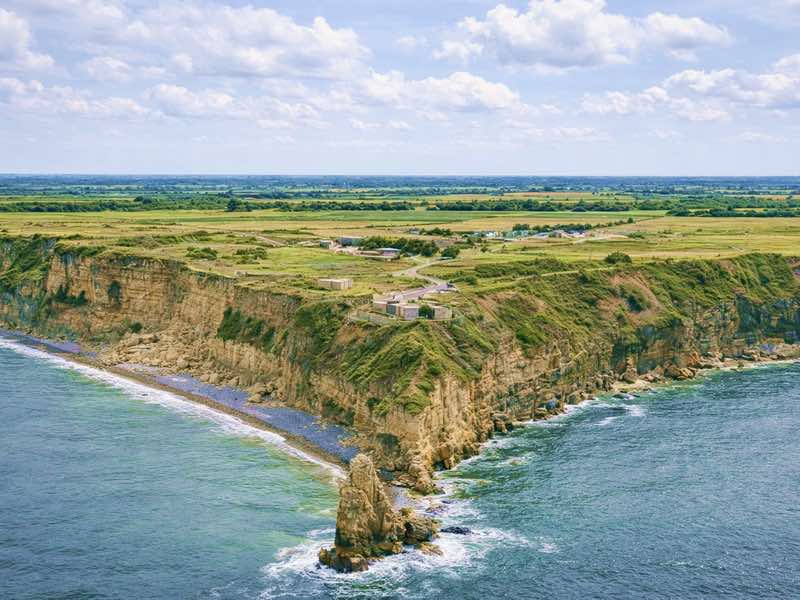 Pointe du Hoc
Pointe du Hoc was a key German coastal position between Utah and Omaha. US Rangers scaled the cliffs to attack the site, believing it held artillery that could threaten the landing beaches.
This is one of the most dramatic locations in the guide, with its cliffside landscape, bunkers and bomb craters helping visitors visualise the intensity of the assault.
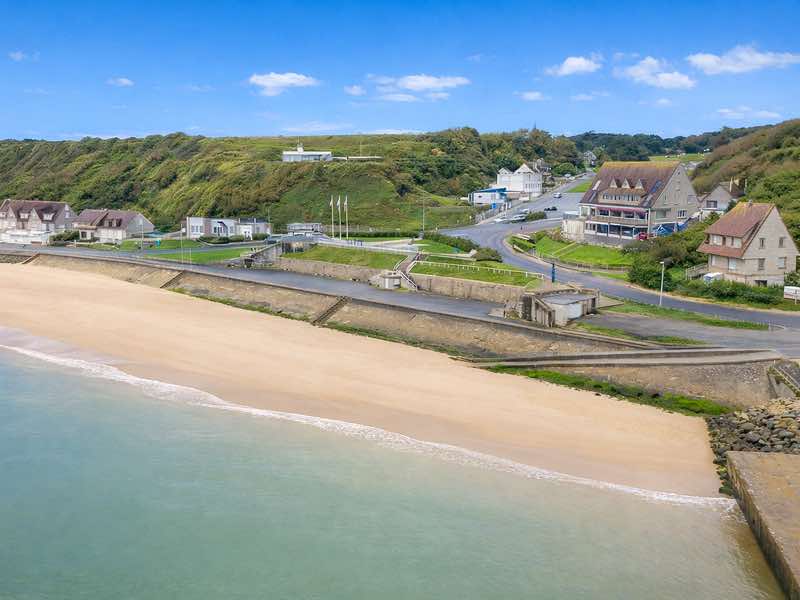 Omaha Beach
Omaha Beach was the bloodiest of the D-Day landing beaches. American troops faced strong German defences, open sand, obstacles, mines and fire from elevated positions.
The audio guide explains the challenges faced by the soldiers landing here and why Omaha became one of the defining symbols of D-Day.
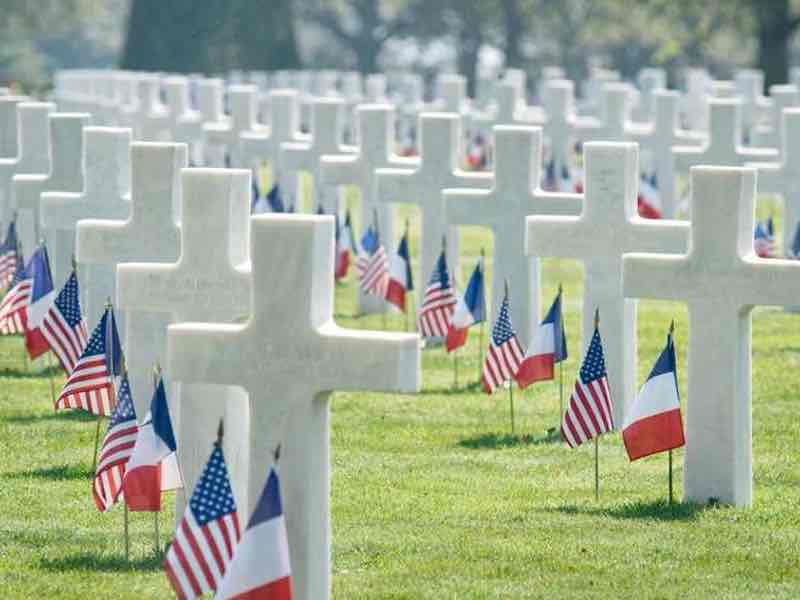 Normandy American Cemetery
The Normandy American Cemetery overlooks Omaha Beach and is one of the most important memorial sites in Normandy.
This stop provides space for reflection after visiting the battlefield itself. The guide connects the events on the beach below with the sacrifice of those buried and remembered here.
Gold Beach Sector – British
Gold Beach was one of the British landing sectors and played a vital role in the success of D-Day. The area includes coastal batteries, landing beaches, artificial harbour remains and major memorials.
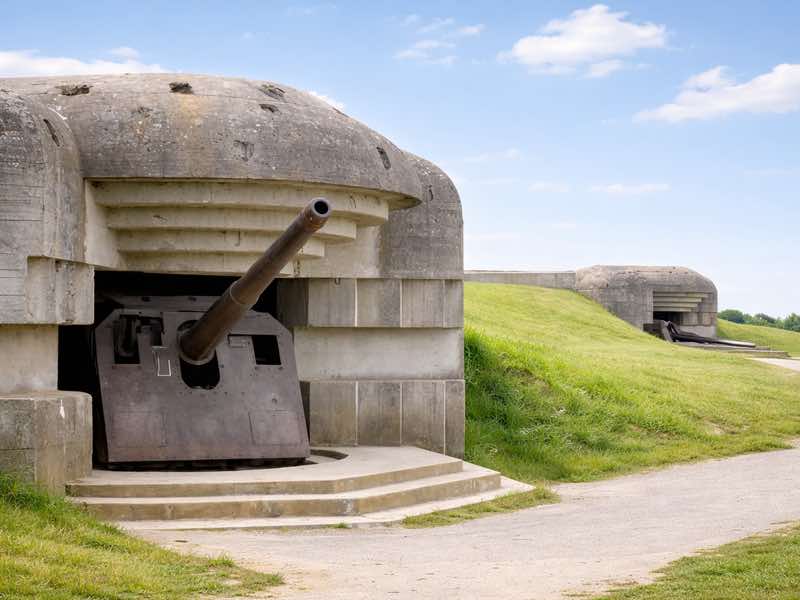 Longues-sur-Mer
Longues-sur-Mer is famous for its German coastal battery, where original gun casemates still remain. The position was part of the Atlantic Wall and had a clear role in defending the Normandy coast.
The audio guide uses this site to explain how German coastal artillery worked and why neutralising these batteries was essential for the invasion.
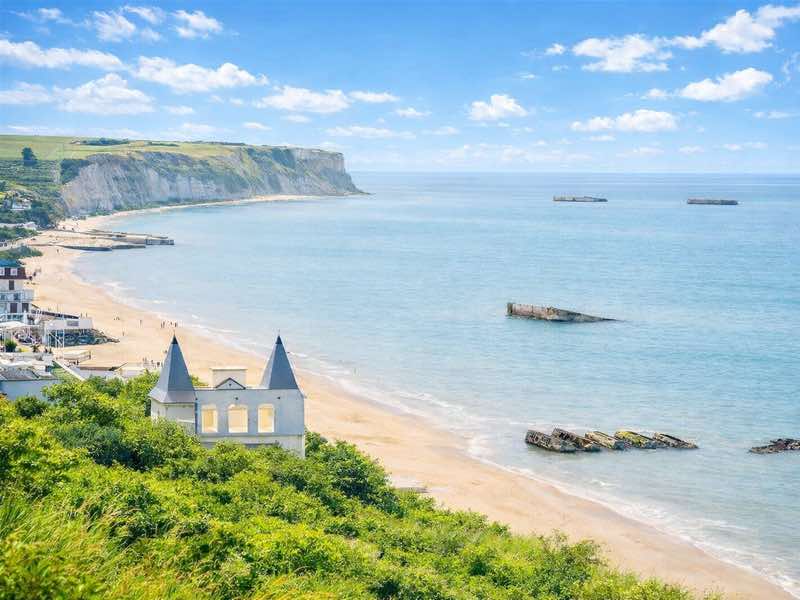 Arromanches
Arromanches is closely linked to the Mulberry Harbour, the artificial port built by the Allies after D-Day. Remains of the harbour can still be seen offshore.
This stop helps visitors understand the importance of logistics. D-Day was not only about getting troops onto the beaches; it was also about supplying and reinforcing them in the days and weeks that followed.
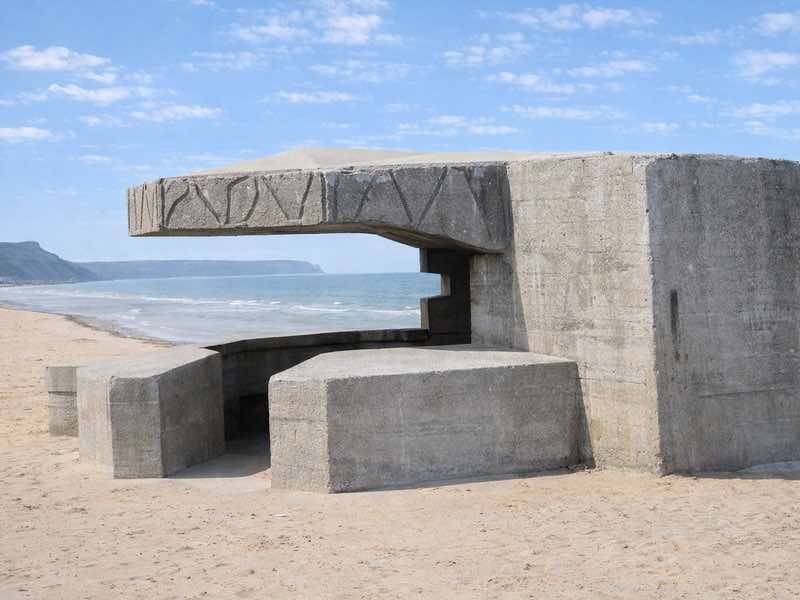 Gold Beach
Gold Beach was attacked by British forces on D-Day. The landings here helped secure a central part of the invasion area and supported the advance inland.
The audio guide places Gold Beach within the wider British operation and explains its connection to nearby sites such as Arromanches and Longues-sur-Mer.
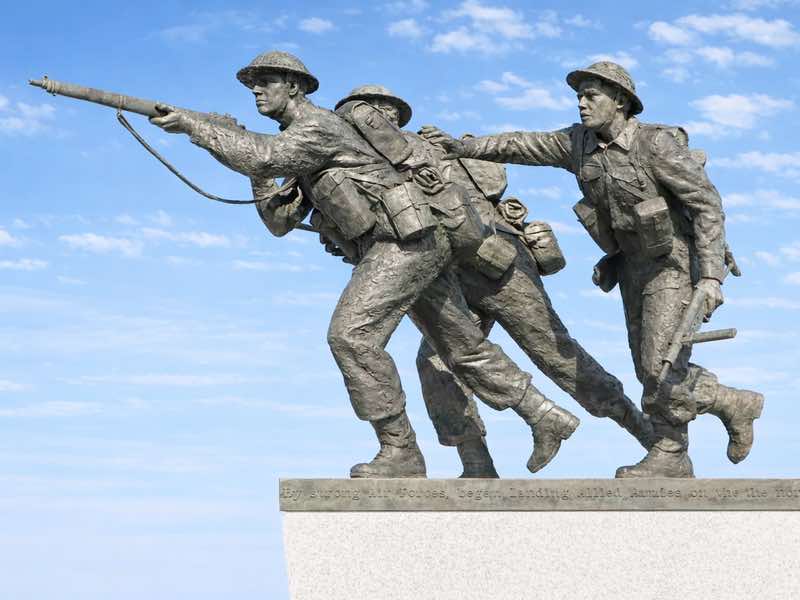 British Normandy Memorial
The British Normandy Memorial honours the British personnel who died during the Normandy campaign.
As part of the audio guide, this stop provides a respectful conclusion to the Gold Beach sector and helps connect the battlefield story with remembrance.
Juno Beach Sector – Canadian
Juno Beach was the Canadian landing sector on D-Day. The fighting here was intense, with Canadian forces landing under heavy fire before pushing inland through coastal towns and villages.
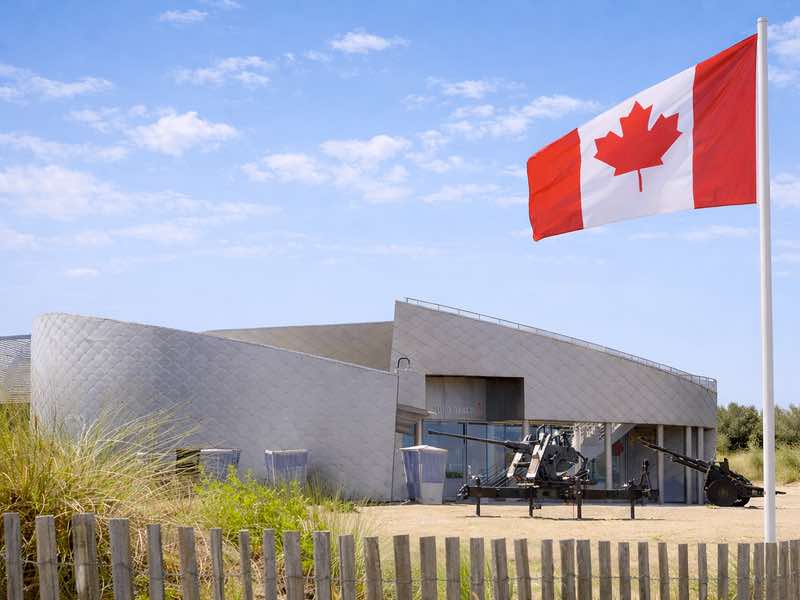 Courseulles-sur-Mer
Courseulles-sur-Mer was one of the key landing areas on Juno Beach. Canadian troops came ashore here and fought to secure the town and surrounding area.
The audio guide explains the Canadian role on D-Day and how Courseulles-sur-Mer fits into the wider Juno Beach story.
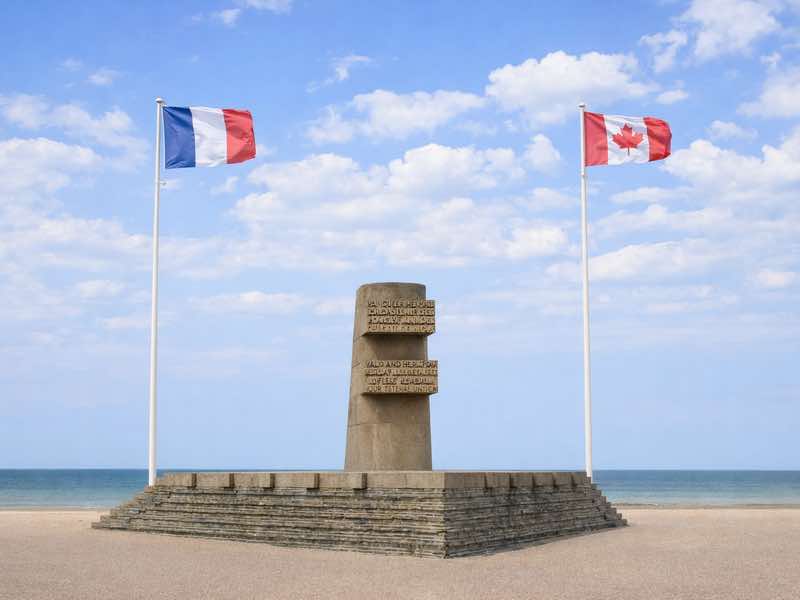 Bernières-sur-Mer
Bernières-sur-Mer is another important Canadian landing site. The seafront and town help visitors understand how quickly the battle moved from the beach into built-up areas.
This stop adds context to the experience of Canadian soldiers as they advanced from the shoreline into Normandy’s villages and roads.
Sword Beach Sector – British
Sword Beach was the easternmost D-Day landing beach. British troops landed here with objectives that included securing the coast, linking with airborne forces and pushing towards Caen.
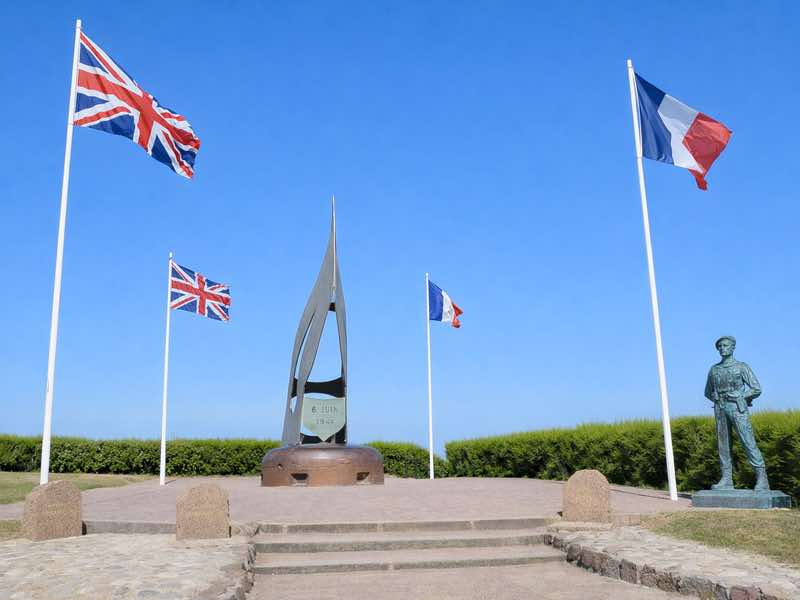 Sword Beach
Sword Beach was a vital British landing area on the eastern flank of the invasion. Its position made it strategically important for protecting the edge of the Allied beachhead.
The audio guide explains the role of Sword Beach and how the landings here connected with airborne operations further inland.
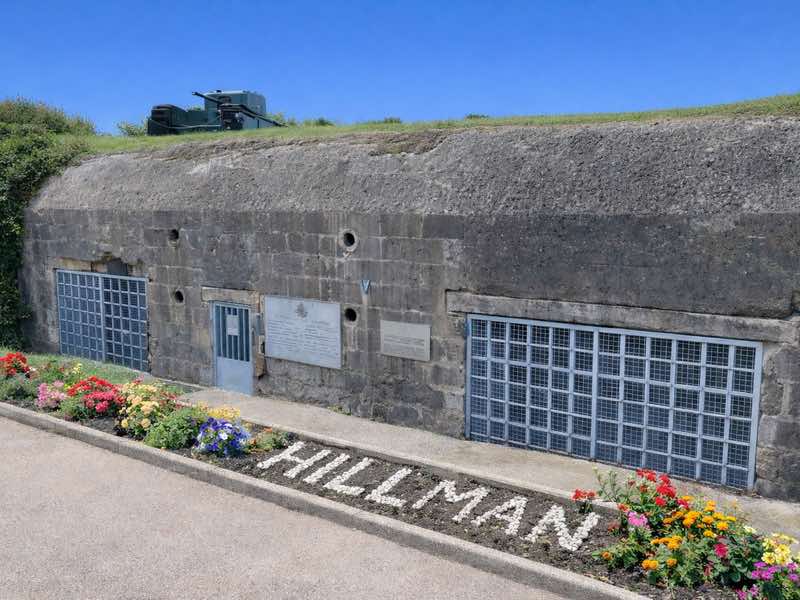 Hillman
Hillman was a major German defensive complex inland from Sword Beach. It was heavily fortified and became an important objective for British forces after the landings.
This stop helps visitors understand that the battle did not end at the waterline. Many of the hardest fights took place inland against prepared defensive positions.
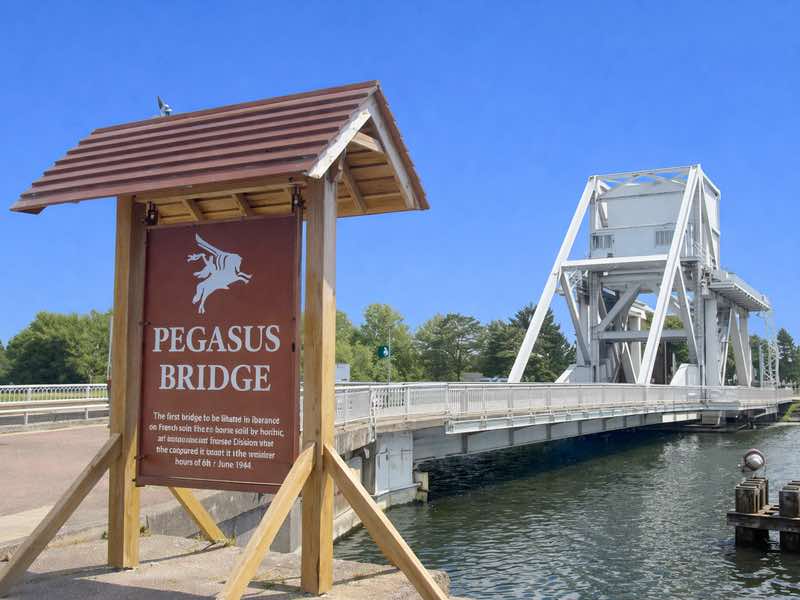 Pegasus Bridge
Pegasus Bridge is one of the most famous airborne sites in Normandy. British airborne forces captured the bridge in the early hours of D-Day to help secure the eastern flank of the invasion.
The audio guide uses Pegasus Bridge to show how airborne and seaborne operations worked together as part of the same plan.
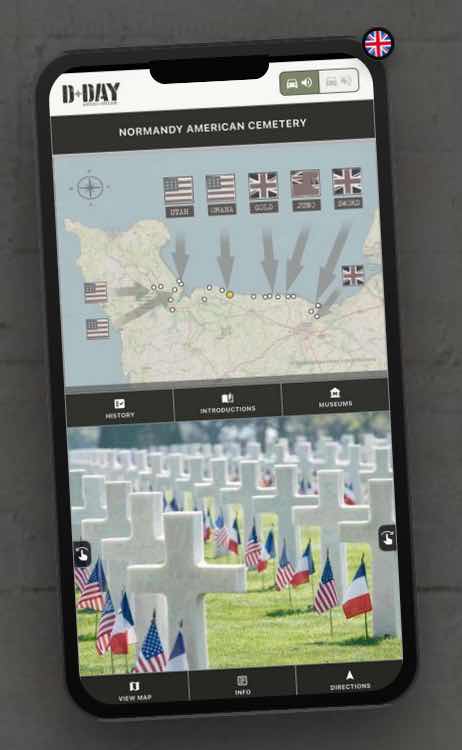 Why Use a D-Day Beaches Audio Guide?
A self-guided audio tour allows you to explore Normandy with more freedom while still understanding the history behind each location. Instead of simply arriving at a beach, bunker or memorial, you hear the story of what happened there and how it connects to the wider D-Day operation.
Our D-Day beaches audio guide is ideal for visitors who want to:
Understand the five main D-Day sectors
Explore American, British and Canadian landing areas
Visit key battlefield sites in a logical route
Learn the history without joining a fixed group tour
Add context to beaches, cemeteries, bunkers and memorials
Travel at their own pace through Normandy
Explore the D-Day Beaches at Your Own Pace
From the airborne battles around La Fière and Pegasus Bridge to the sands of Utah, Omaha, Gold, Juno and Sword, each stop in this guide helps bring the Normandy landings into clearer focus.
Whether you are visiting for the first time or returning to explore the battlefield in more detail, this D-Day beaches audio guide gives you a structured, meaningful way to experience the sites that shaped 6 June 1944.
Frequently Asked Questions
What beaches are included in the D-Day beaches audio guide?
The guide includes the main D-Day landing sectors: Utah Beach, Omaha Beach, Gold Beach, Juno Beach and Sword Beach, along with selected inland sites, cemeteries, memorials and German defensive positions.
Can I visit the D-Day beaches without a tour guide?
Yes. A D-Day beaches audio guide is a flexible way to explore the Normandy landing sites independently while still learning the history and context of each location.
Which American D-Day sites are included?
The American sectors include La Fière, WN8, Utah Beach, Brécourt Manor, Angoville-au-Plain, Carentan, La Cambe German Cemetery, Pointe du Hoc, Omaha Beach and the Normandy American Cemetery.
Which British D-Day sites are included?
The British sectors include Gold Beach, Longues-sur-Mer, Arromanches, the British Normandy Memorial, Sword Beach, Hillman and Pegasus Bridge.
Which Canadian D-Day sites are included?
The Canadian Juno Beach sector includes Courseulles-sur-Mer and Bernières-sur-Mer.
Is the D-Day beaches audio guide suitable for a self-drive trip?
Yes. The guide is well suited to a self-drive visit, allowing you to move between the D-Day sites at your own pace and focus on the locations included in the route.