




Article
Turn Your Phone into Your Private D-Day Tour Guide
 Discover the historic D-Day beaches of Normandy at your own pace with a flexible self-guided tour on your iPhone or Android phone. No coach timetable, no large group, no need to follow a guide with a flag — just you, your phone, and the powerful stories of one of the most important days in modern history.
This smartphone tour is designed for travellers who want the freedom to explore the Normandy landing beaches independently while still understanding what happened here on 6 June 1944. Using your mobile phone, you can follow key sites, listen to engaging commentary, view route guidance, and pause whenever you want to spend more time at a memorial, museum, cemetery or viewpoint.
The D-Day landing beaches stretch across the Normandy coast and are known by their wartime code names: Utah, Omaha, Gold, Juno and Sword. Each beach tells part of the wider story of Operation Overlord, the Allied invasion of Normandy, and the beginning of the liberation of Western Europe.
Explore the D-Day Beaches at Your Own Pace
A self-guided D-Day tour gives you the freedom to experience Normandy in a more personal way. Start when you like, stop for photographs, take time for reflection, and move through the route at a pace that suits you.
With your iPhone or Android phone, you can visit places connected to the Allied landings, airborne operations, coastal defences and the liberation of Normandy. The tour helps you understand not just where events happened, but why each location mattered.
This is ideal for visitors who prefer independent travel, want to avoid large guided groups, are travelling by car around Normandy, or would like historical context without hiring a private guide.
Some of the Locations You Can See on the Tour
Your self-guided smartphone tour includes 20 of the most important D-Day sites in Normandy, from the American landing beaches in the west to the British and Canadian sectors further east.
Omaha Beach
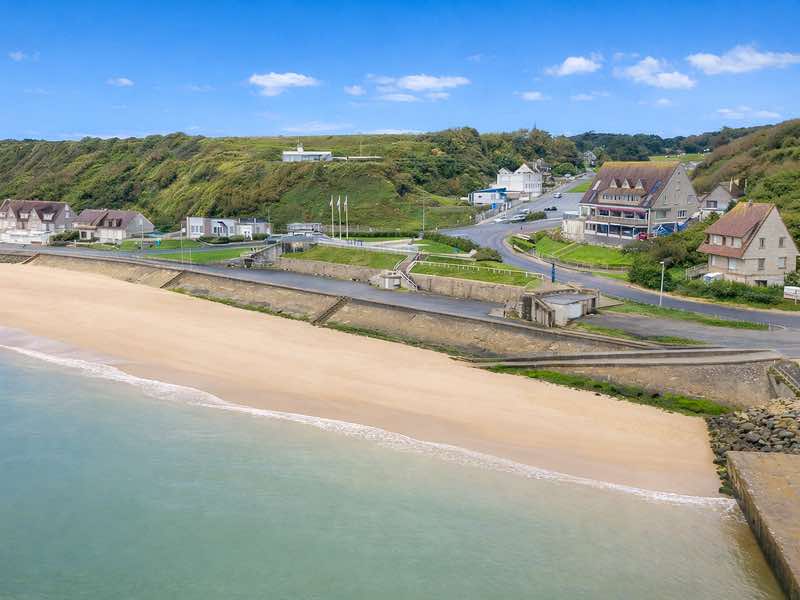 Omaha Beach is one of the most famous and moving D-Day locations. It was the scene of some of the heaviest fighting on 6 June 1944 and remains a deeply emotional place to visit today.
The wide beach, surrounding bluffs and nearby memorials help visitors understand the scale of the challenge faced by American forces during the landings. A visit here is often one of the most powerful moments of any D-Day beaches tour.
Nearby, the Normandy American Cemetery overlooks Omaha Beach and is an important place of remembrance for those who lost their lives during the Normandy campaign.
Utah Beach
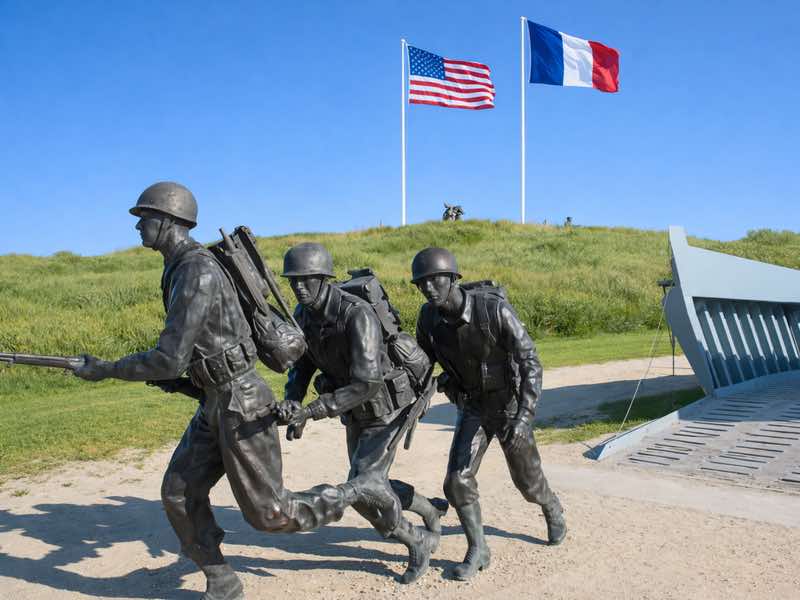 Utah Beach was the westernmost of the D-Day landing beaches and played a crucial role in linking the seaborne landings with airborne operations further inland.
The area is closely connected with the American airborne divisions and the fighting around Sainte-Mère-Église, one of the first French towns liberated during the invasion. Utah Beach is an excellent place to begin a self-guided D-Day tour, especially if you are travelling from the western side of Normandy.
Pointe du Hoc
Pointe du Hoc is one of the most dramatic sites on the Normandy coast. American Rangers scaled the cliffs here under fire to attack German positions between Utah and Omaha Beach.
Today, the landscape still bears visible bomb craters, bunkers and wartime scars. It is a striking place to walk, reflect and understand the difficulty of the assault. Visitors should stay on marked paths, as the ground can be uneven.
Gold Beach
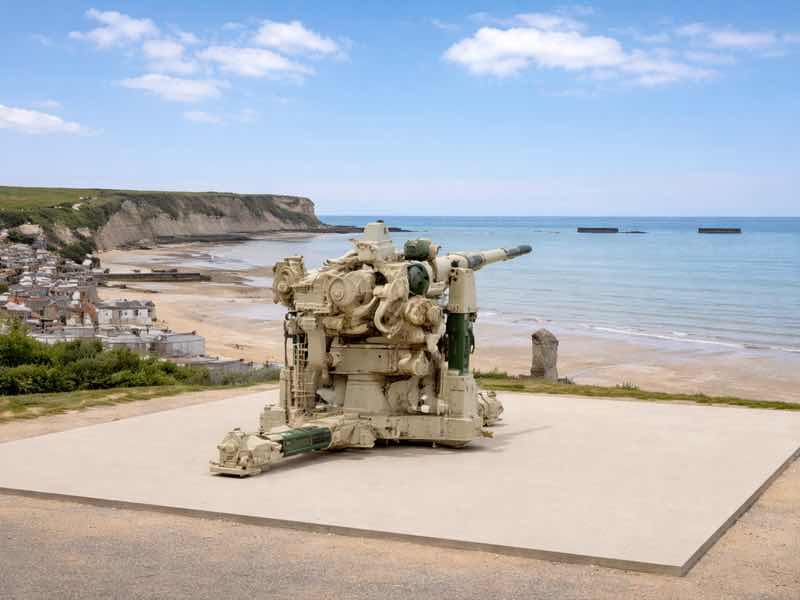 Gold Beach was assigned to British forces and is closely linked with the artificial Mulberry Harbour at Arromanches. This was one of the most important engineering achievements of the Normandy campaign, allowing supplies, vehicles and reinforcements to be brought ashore after D-Day.
Gold Beach is also close to the British Normandy Memorial at Ver-sur-Mer, one of the most meaningful stops on a self-guided tour of the British D-Day sector.
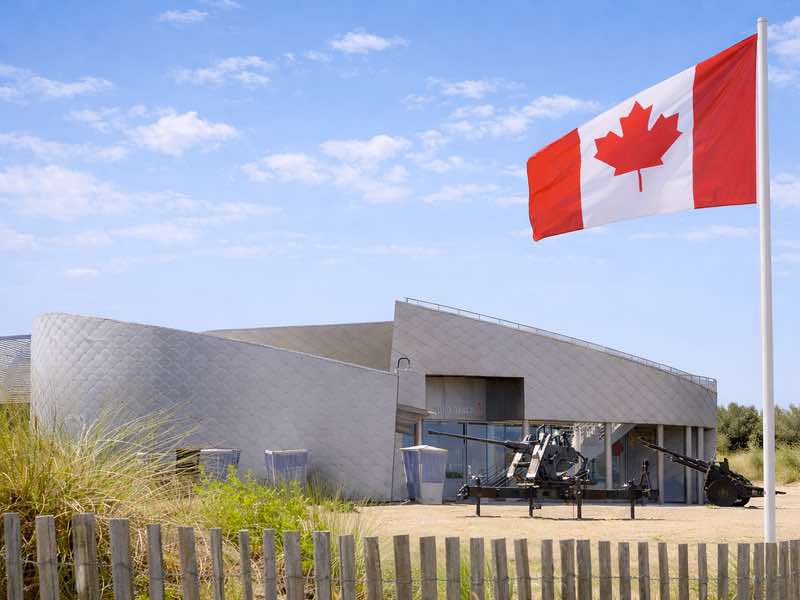 Juno Beach
Juno Beach was the Canadian landing sector on D-Day. It is an essential stop for visitors who want to understand the Canadian role in the Normandy landings and the wider Allied effort.
The beach, memorials and surrounding villages help tell the story of the Canadian troops who came ashore here and fought their way inland during the Battle of Normandy.
 Sword Beach
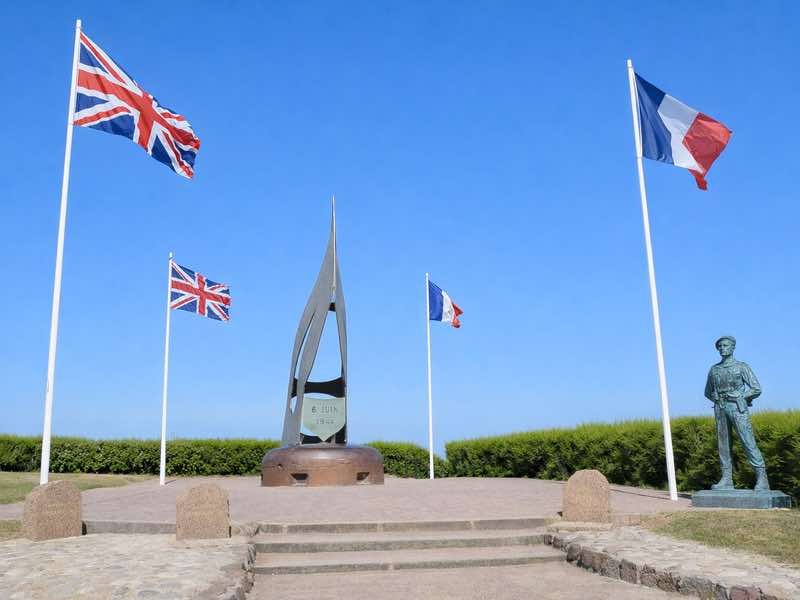
Sword Beach was the easternmost of the five D-Day landing beaches and was assigned to British forces. It sits closer to Caen and is a useful starting or finishing point for visitors travelling from that area.
The Sword Beach sector is closely connected with British commandos, airborne operations and the advance towards Caen, making it an important part of the wider D-Day story.
Why Choose a Self-Guided Smartphone Tour?
A traditional guided tour can be excellent, but it is not always the right fit for every traveller. A self-guided D-Day beaches tour gives you more control over your day.
You can begin the tour whenever you are ready, follow the route in the order that suits your travel plans, and take breaks without feeling rushed. The commentary is available on your own phone, so you can listen privately, replay sections, or skip ahead to the places that interest you most.
For families, couples, solo travellers and history enthusiasts, this format offers a practical and immersive way to explore Normandy.
Works on iPhone and Android
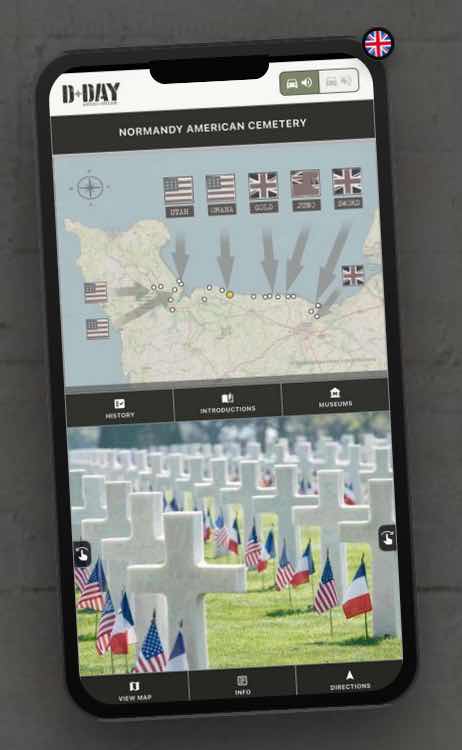 The tour is designed to work with modern smartphones, including both iPhone and Android devices. Once set up, your phone becomes your personal D-Day guide, helping you navigate between sites and understand the history around you.
Before starting your day, we recommend charging your phone fully, bringing a car charger or power bank, downloading any required content in advance, and using headphones if you want a more immersive audio experience.
It is also worth checking opening times for museums, cemeteries and visitor centres before you travel, especially during public holidays or outside the main tourist season.
A More Personal Way to Visit Normandy
The D-Day beaches are not just historical landmarks. They are places of courage, loss, strategy and remembrance. A self-guided tour allows you to slow down and connect with the landscape in your own way.
You can stand on the beaches, look out across the Channel, visit cemeteries and memorials, and take time to reflect on the scale of what happened here.
The British Normandy Memorial at Ver-sur-Mer, overlooking Gold Beach, is one of the most moving places to include on a D-Day beaches tour. It records the names of 22,540 servicemen and women under British command who died on D-Day and during the Battle of Normandy in the summer of 1944, making it an important stop for reflection and remembrance.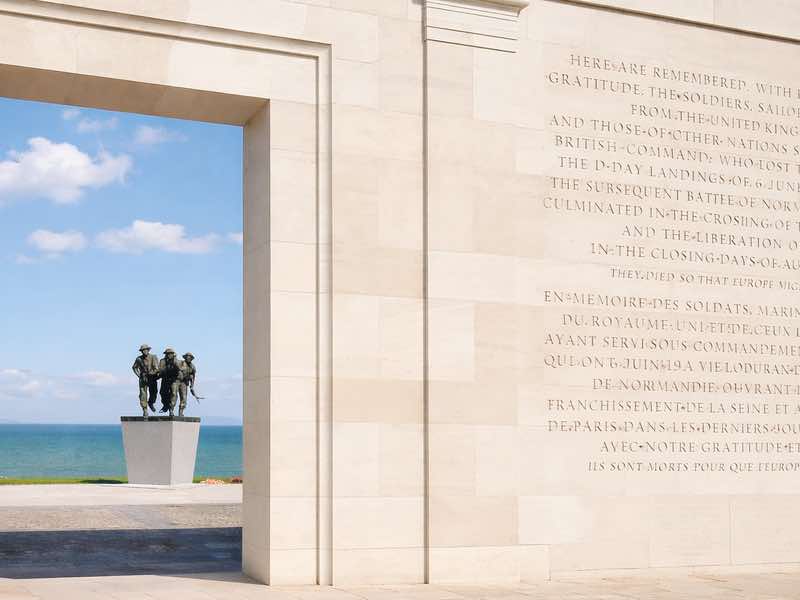
The flexibility of a phone-based tour means you can decide where to spend the most time. Some visitors focus on American sites such as Omaha, Utah and Pointe du Hoc. Others prefer to explore the British and Canadian sectors, including Gold, Juno and Sword. Many choose to cover all five beaches over one or two days.
Suggested One-Day D-Day Beaches Route
A one-day itinerary can give you a strong introduction to the D-Day beaches, especially if you are travelling by car.
Start at Sainte-Mère-Église or Utah Beach, then continue towards Pointe du Hoc and Omaha Beach. Allow time for the Normandy American Cemetery before heading towards Arromanches, Gold Beach and the British Normandy Memorial at Ver-sur-Mer.
Visitors with more time can continue to Juno Beach and Sword Beach, or divide the route over two days for a more relaxed experience. The landing beaches are spread across the Normandy coast, so planning your route in advance will help you make the most of your visit.
Who Is This Tour For?
This D-Day beaches self-guided smartphone tour is suitable for first-time visitors to Normandy, World War II history enthusiasts, families travelling by car, couples looking for a meaningful day trip, and visitors staying in Bayeux, Caen, Carentan or nearby towns.
It is also a good option for travellers who prefer independent sightseeing and want audio-style guidance without joining a group.
You can combine the tour with your own stops for lunch, photography, museums, coastal walks or quiet moments of remembrance.
What Makes This Tour Different?
This is not just a map with pins. A good self-guided D-Day beaches tour brings the story of Normandy together in a clear and accessible way.
It helps you understand the landings, the people involved, the challenges faced by Allied forces, and the lasting importance of the sites you are visiting.
You get the structure of a guided experience with the freedom of independent travel.
Book Your D-Day Beaches Self-Guided Smartphone Tour
Turn your iPhone or Android phone into your personal guide to the D-Day beaches of Normandy. Explore the coast, follow the story of 6 June 1944, and experience the major landing sites at your own pace.
Whether you have one day or a full weekend, this self-guided tour gives you the flexibility to discover Normandy’s most important World War II locations in a way that is simple, respectful and memorable.
Start your D-Day Beaches self-guided tour today and explore Normandy with confidence.
FAQ
Can I do the D-Day beaches without a guide?
Yes. A self-guided smartphone tour is a great way to visit the D-Day beaches independently while still getting historical context, route guidance and commentary on your phone.
Does the tour work on iPhone and Android?
Yes. The tour is designed for both iPhone and Android smartphones.
How long does it take to visit the D-Day beaches?
You can visit selected highlights in one day, but two days gives you more time to explore Utah, Omaha, Gold, Juno and Sword Beach without rushing.
Which D-Day beach should I visit first?
Many visitors start at Utah Beach or Sainte-Mère-Église if travelling west to east, or Sword Beach if arriving from Caen. The best starting point depends on where you are staying and how much time you have.
Do I need a car for this tour?
A car is strongly recommended because the D-Day beaches, memorials and museums are spread along a wide section of the Normandy coast.
Can I pause the tour?
Yes. A self-guided phone tour allows you to pause, stop, replay sections and continue at your own pace.
Is this tour suitable for families?
Yes. It is suitable for families, although parents may want to explain the historical context to younger children, as many sites are places of remembrance.