



Article
Visit Omaha Beach with the D-Day Audio Guide
Omaha Beach: What to See, History, Visiting Tips & Self-Guided Tours
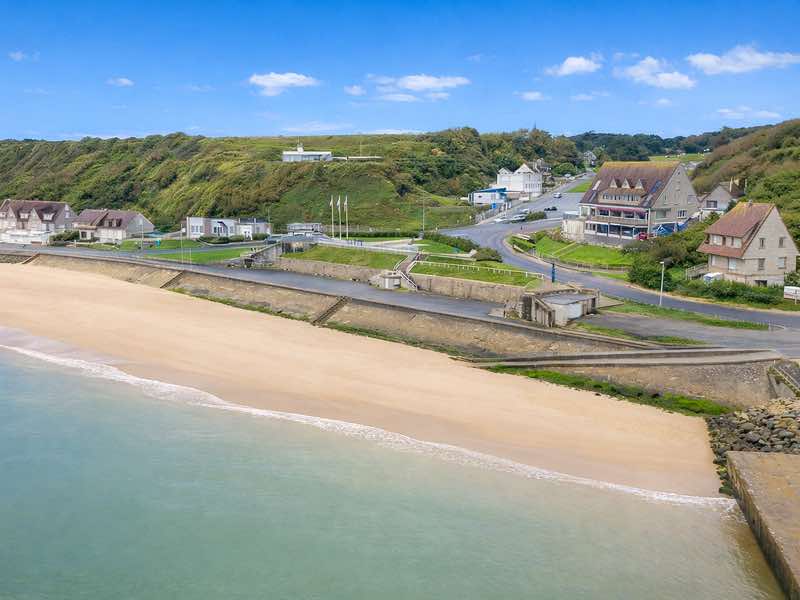 Omaha Beach is one of the most powerful and moving places to visit in Normandy. On June 6, 1944, American troops landed here during the D-Day invasion under devastating German fire, making Omaha one of the most difficult and costly landing sectors of Operation Overlord.
Today, the beach is peaceful, open, and deeply emotional. Visitors can walk across the sand, look up toward the bluffs, visit nearby memorials and bunkers, and follow the route of the Allied advance inland.
Located around 35 minutes from Bayeux by car, Omaha Beach is one of the most important D-Day sites in Normandy. It is also easy to visit as part of a self-guided driving route, especially when combined with Pointe du Hoc, the Normandy American Cemetery, and other nearby battlefield locations.
Where Is Omaha Beach?
Omaha Beach is located on the Normandy coast in northern France, between Vierville-sur-Mer and Colleville-sur-Mer.
It sits in the American sector of the D-Day landing beaches and is within easy driving distance of Bayeux, one of the best towns to use as a base for exploring Normandy’s Second World War sites.
By car, Omaha Beach is approximately:
- 35 minutes from Bayeux
- 15 minutes from Pointe du Hoc
- A few minutes from the Normandy American Cemetery
- Around 1 hour from Caen
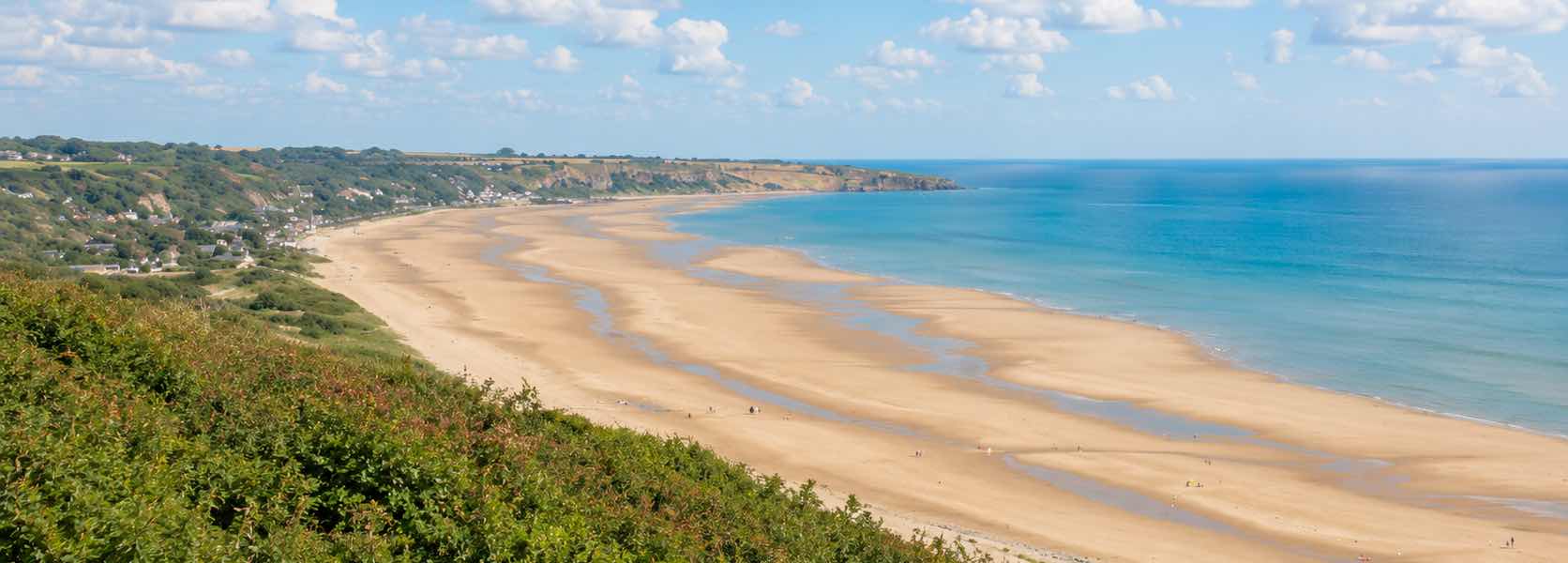
Unlike some D-Day sites hidden among villages, fields, or country lanes, Omaha Beach feels immediately vast. The wide sand, open sea, steep bluffs, and long horizon help visitors understand the scale of the challenge faced by American troops on the morning of June 6, 1944.
Parking is available at several points along the beachfront, including near the Les Braves memorial at Saint-Laurent-sur-Mer.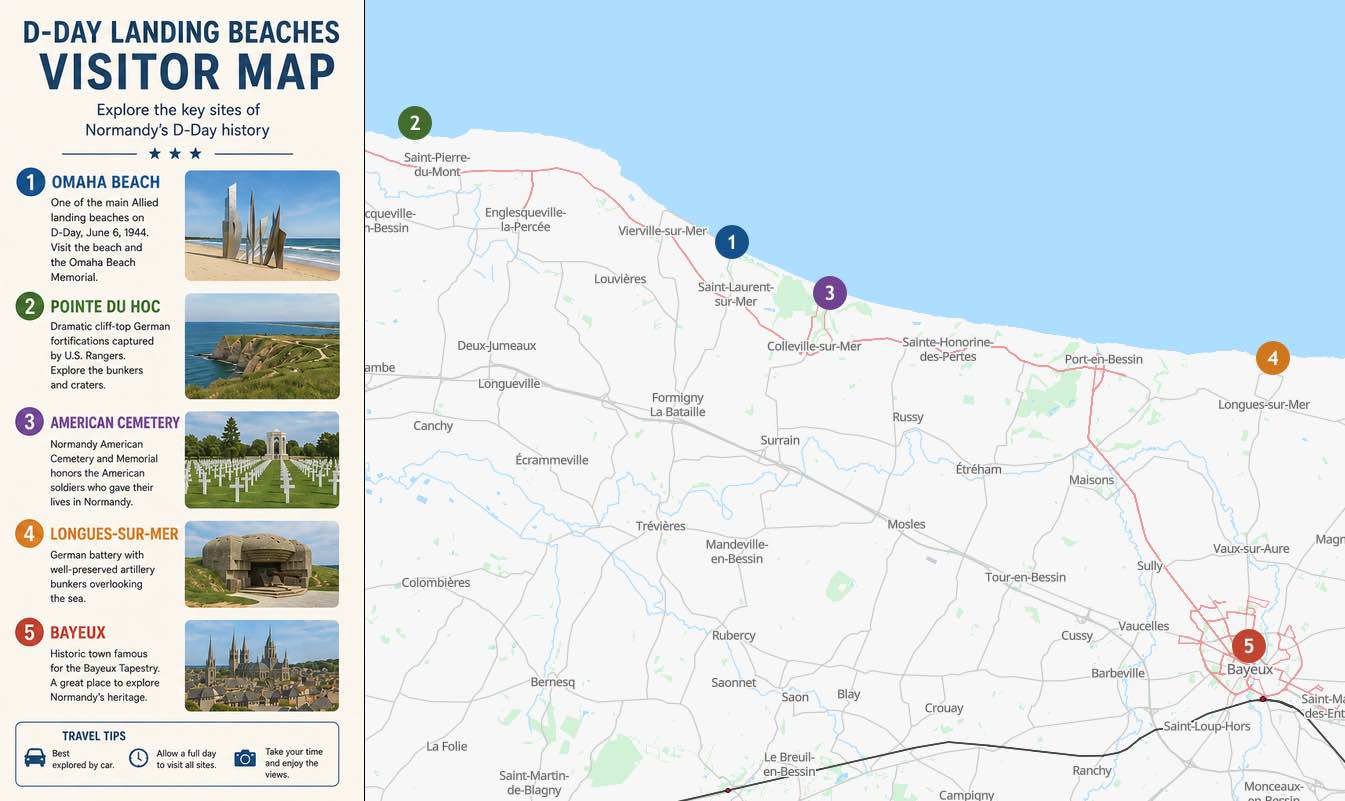
What Happened at Omaha Beach on D-Day?
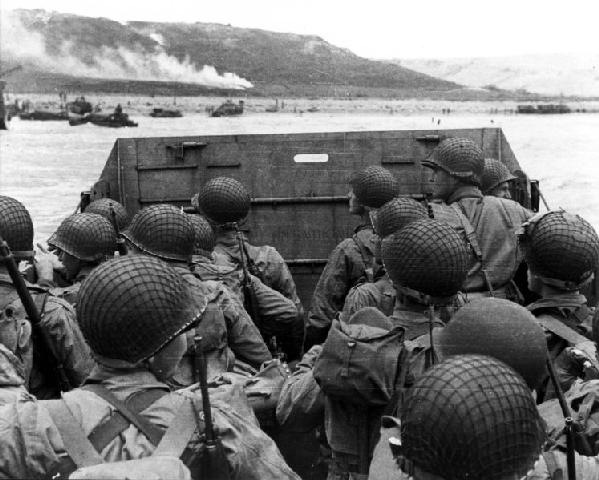 Omaha Beach was one of five Allied landing beaches used during the D-Day invasion of Normandy. The assault began shortly after 6:30 a.m. on June 6, 1944.
American forces, mainly from the U.S. 1st Infantry Division and U.S. 29th Infantry Division, landed here with the objective of breaking through German coastal defenses and pushing inland toward key roads and villages behind the beach.
The landing quickly became one of the deadliest parts of D-Day.
German defensive positions overlooked the beach from the high ground above. Machine guns, artillery, mortars, mines, obstacles, and bunkers covered the open sand below. Rough seas and strong currents scattered many landing craft, while some amphibious tanks sank before they reached shore.
As American soldiers landed, many found themselves exposed and pinned down under intense fire. The beach offered very little cover, and the exits leading inland were heavily defended.
Despite confusion, heavy casualties, and fierce resistance, small groups of American troops gradually fought their way forward. They climbed the bluffs, moved through gaps in the defenses, and slowly opened routes inland.
By the end of June 6, Allied forces had secured a fragile foothold at Omaha Beach.
Because of the scale of the losses, Omaha later became known as “Bloody Omaha.”
What to See at Omaha Beach
There is no single “entrance” to Omaha Beach. Instead, the area is best explored through a combination of beach walks, memorial stops, viewpoints, and nearby historic sites.
Les Braves Memorial
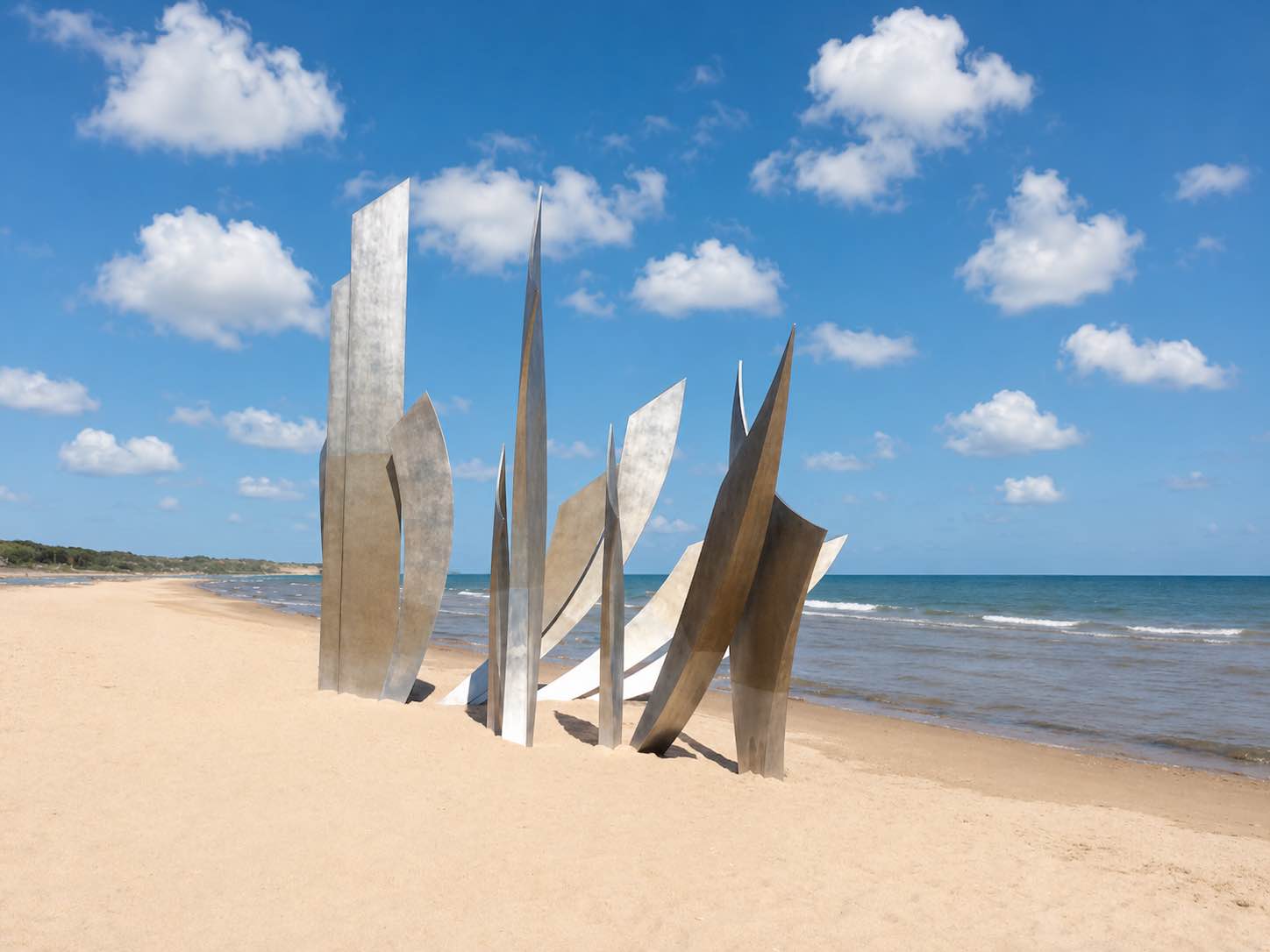 Les Braves is one of the most recognizable landmarks on Omaha Beach.
Installed directly on the sand near Saint-Laurent-sur-Mer, this striking modern sculpture commemorates the courage, sacrifice, and freedom associated with the D-Day landings.
At low tide, the memorial creates one of the most iconic views along the Normandy coastline, with the wide beach stretching behind it and the bluffs rising in the distance.
It is a good place to begin your visit, especially if you want to walk the beach and take in the scale of the battlefield.
Omaha Beach Itself
Walking on Omaha Beach is often the most emotional part of the visit.
The beach may look calm today, but its size tells an important story. At low tide, the distance between the waterline and the inland bluffs becomes especially clear. This helps visitors understand how exposed American soldiers were as they crossed the sand under fire.
The atmosphere changes throughout the day depending on the weather, tide, and number of visitors. Early morning and late afternoon are often the quietest and most reflective times to visit.
Take time to walk slowly, look back toward the sea, and then toward the higher ground. The geography of Omaha Beach explains much of what happened here.
German Defensive Positions and Bunkers
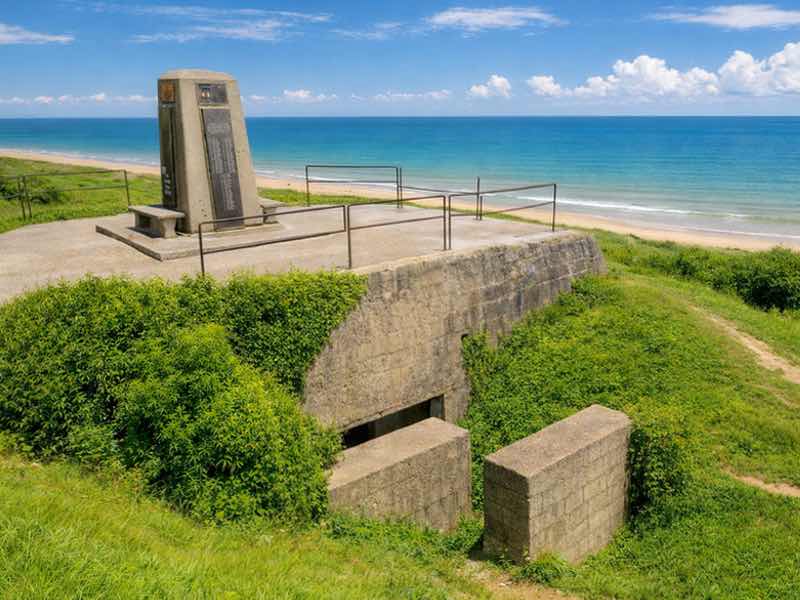 Several German defensive positions can still be seen around the Omaha Beach sector.
These strongpoints were part of the Atlantic Wall, the German coastal defense system built to protect occupied Europe from an Allied invasion. From the elevated ground above the beach, German forces had clear views across the sand and sea.
Visiting these positions helps place the battle in context. From the bluffs, it becomes easier to understand why the landing was so difficult and why the beach exits were so important.
For the best experience, combine time on the sand with stops at higher viewpoints overlooking the beach.
Vierville Draw
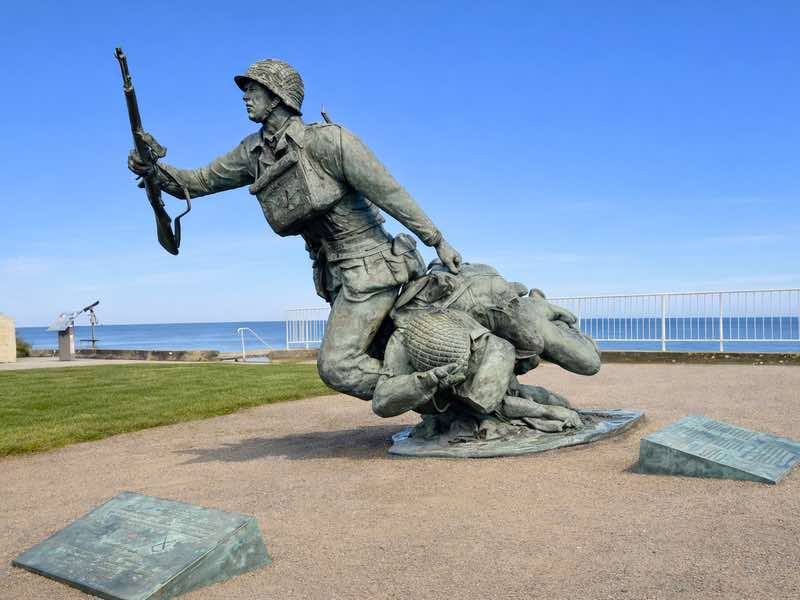 The Vierville draw was one of the key exits leading inland from Omaha Beach.
On D-Day, these draws were essential because Allied forces needed them to move men, vehicles, weapons, and supplies off the beach and into the countryside beyond.
German troops heavily defended these access points, knowing how important they were to the success of the landing.
Standing near the Vierville draw today helps visitors understand why the battle did not end at the shoreline. The real objective was not simply to land on the beach, but to break through the defenses and move inland.
Normandy American Cemetery
 Just above Omaha Beach near Colleville-sur-Mer is the Normandy American Cemetery, one of the most important memorial sites in France.
The cemetery overlooks the coastline and contains the graves of 9,388 American military personnel, most of whom died during the Normandy campaign. Rows of white marble crosses and Stars of David stretch across the carefully maintained grounds.
The Walls of the Missing list the names of more than 1,500 service members whose remains were never recovered or identified.
Many visitors choose to visit Omaha Beach and the Normandy American Cemetery together. Seeing the beach first and then the cemetery can be especially powerful, as it connects the battlefield landscape with the human cost of the campaign.
Best Way to Visit Omaha Beach
Omaha Beach is best experienced slowly.
While guided tours are popular, many visitors prefer exploring independently. A self-guided visit gives you the freedom to stop where you want, spend longer at meaningful locations, and avoid fixed group schedules.
This works particularly well in Normandy because many D-Day sites are spread across the countryside. With your own route, you can combine Omaha Beach with nearby locations such as:
- Pointe du Hoc
- Normandy American Cemetery
- Bayeux
- Longues-sur-Mer Battery
- Other D-Day landing beaches
 A self-guided audio tour is especially useful here because the landscape does not always explain itself. The D-Day Audio Guide app uses GPS-triggered stories that play automatically as you drive and walk through the Normandy battlefield.
This helps connect the places around you with the events of June 1944.
Offline access is also helpful, as mobile coverage can be unreliable in rural parts of Normandy.
Nearby D-Day Sites to Visit
Pointe du Hoc
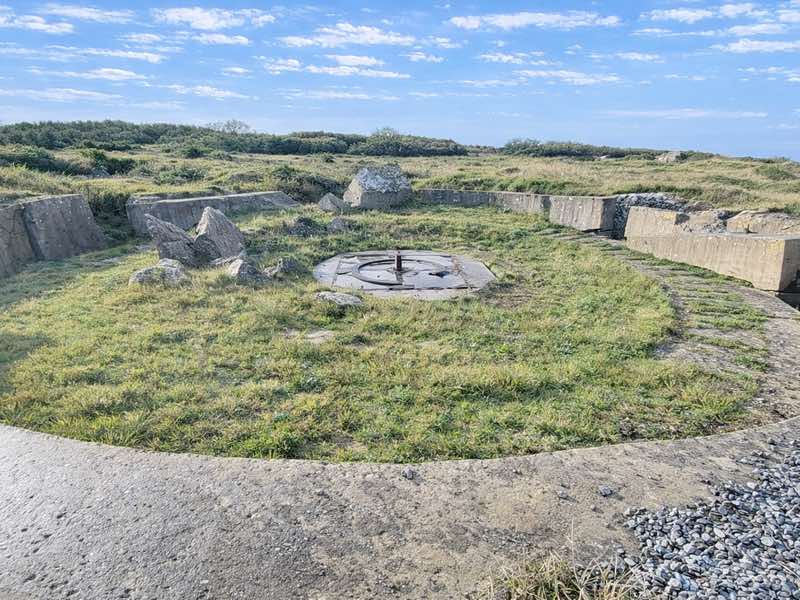 Pointe du Hoc is located around 15 minutes west of Omaha Beach.
This dramatic cliffside site was assaulted by U.S. Army Rangers on D-Day. The Rangers scaled the cliffs under fire to attack German positions believed to threaten the landing beaches.
Today, visitors can still see deep bomb craters, damaged bunkers, and dramatic views over the English Channel.
Pointe du Hoc is one of the best places to combine with Omaha Beach on a half-day route.
Bayeux
Bayeux is one of the best bases for visiting the Normandy landing beaches.
The town escaped much of the destruction seen elsewhere during the Battle of Normandy and has a good choice of hotels, restaurants, museums, and transport links.
From Bayeux, it is easy to drive to Omaha Beach, Pointe du Hoc, the Normandy American Cemetery, and other D-Day sites across the American, British, and Canadian sectors.
If you are planning a self-guided Normandy itinerary, Bayeux is one of the most practical places to stay.
Longues-sur-Mer Battery
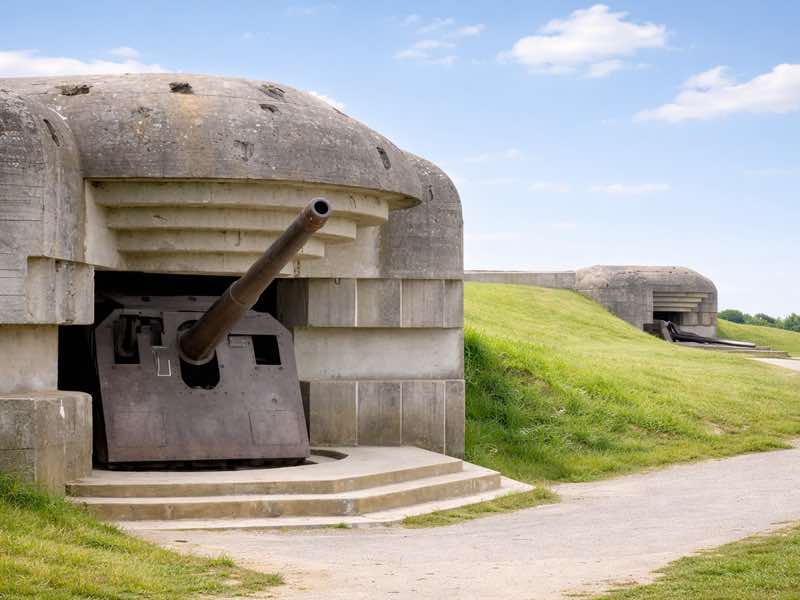 The Longues-sur-Mer Battery is one of the best-preserved German artillery sites in Normandy.
Several original naval guns remain in place, making it an excellent stop for understanding the scale of the Atlantic Wall defenses.
The battery is located between Omaha Beach and the British landing sector, so it fits well into a wider D-Day driving route.
Best Time to Visit Omaha BeachSpring
Spring is one of the best times to visit Omaha Beach. The weather is usually mild, the countryside is green, and the roads are quieter than in summer.
It is a good season for visitors who want a more peaceful experience.
June
June is the most symbolic time to visit because it marks the anniversary of the D-Day landings.
Ceremonies, commemorations, reenactments, historic military vehicles, and special events take place across Normandy during this period.
However, June is also one of the busiest times of year, especially around June 6. Accommodation can book up early, and roads near major D-Day sites may be crowded.
August
August can be very busy with tourists coming to enjoy the beaches. Try and avoid this month if possible.
Autumn
Autumn is another excellent time to visit Omaha Beach.
The weather is cooler, the summer crowds have gone, and the light along the Normandy coast can be beautiful for photography.
For a quieter self-guided route, September and October are especially good months to consider.
Tips for Visiting Omaha Beach
Wear comfortable shoes if you plan to walk across the sand or visit nearby viewpoints.
Check the tide times before visiting. At low tide, the beach feels much wider, which helps you better understand the distance American troops had to cross.
Allow time for reflection. Omaha Beach is not just a sightseeing stop; it is a battlefield and memorial landscape.
Combine the beach with the Normandy American Cemetery for a deeper understanding of the human cost of D-Day.
Use a car if possible. Public transport to many D-Day sites is limited, and driving gives you much more flexibility.
Download maps or audio content in advance, as mobile signal can be unreliable in parts of rural Normandy.
Frequently Asked Questions About Omaha Beach
Is Omaha Beach worth visiting?
Yes. Omaha Beach is one of the most important and emotional D-Day sites in Normandy. It is especially meaningful for visitors interested in Second World War history, military history, or the Normandy landings.
Can you walk on Omaha Beach?
Yes. Public access is available across much of Omaha Beach. Walking the sand is one of the best ways to understand the scale and geography of the battlefield.
How far is Omaha Beach from Bayeux?
Omaha Beach is approximately 35 minutes from Bayeux by car, making it an easy half-day or full-day trip from the town.
What happened at Omaha Beach?
American forces landed at Omaha Beach on June 6, 1944, during the D-Day invasion. They came under intense German defensive fire from positions overlooking the beach. Despite heavy casualties, U.S. troops eventually secured a foothold and began moving inland.
Is Omaha Beach free to visit?
Yes. Omaha Beach itself is free to visit. Some nearby museums or attractions may charge admission, but public access to the beach is free.
What is the best way to visit Omaha Beach?
The best way to visit Omaha Beach is by car as part of a self-guided D-Day route. This allows you to explore the beach, memorials, viewpoints, cemetery, and nearby sites at your own pace.
Can you visit Omaha Beach without a tour?
Yes. Omaha Beach can be visited independently. A self-guided audio tour can help explain what happened at each location while still giving you the flexibility to travel at your own pace.
Explore Omaha Beach at Your Own Pace
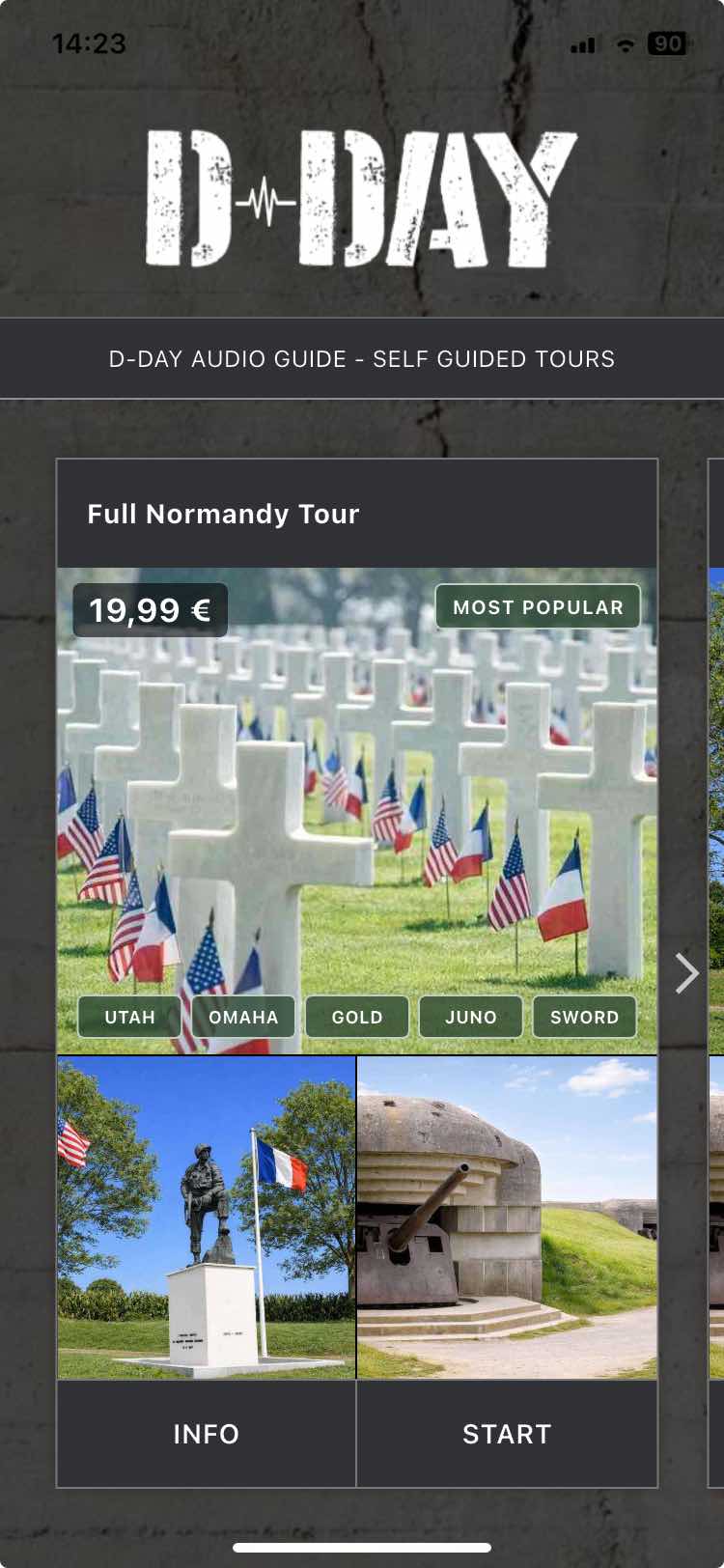 Discover the story of Omaha Beach with GPS-triggered audio, offline maps, and self-guided routes across Normandy’s D-Day battlefields.
With the D-Day Audio Guide app, you can explore the landing beaches independently while hearing the history of each location as you arrive.
Features include:
- Audio stories while driving and walking
- Offline access across Normandy
- Interactive battlefield maps
- Self-guided touring from Bayeux
- Routes covering Omaha Beach, Pointe du Hoc, the Normandy American Cemetery, and more
For a wider journey across the landing beaches, explore the full Normandy Self-Guided Tour.