



Article
2-Day Self-Guided Normandy Tour
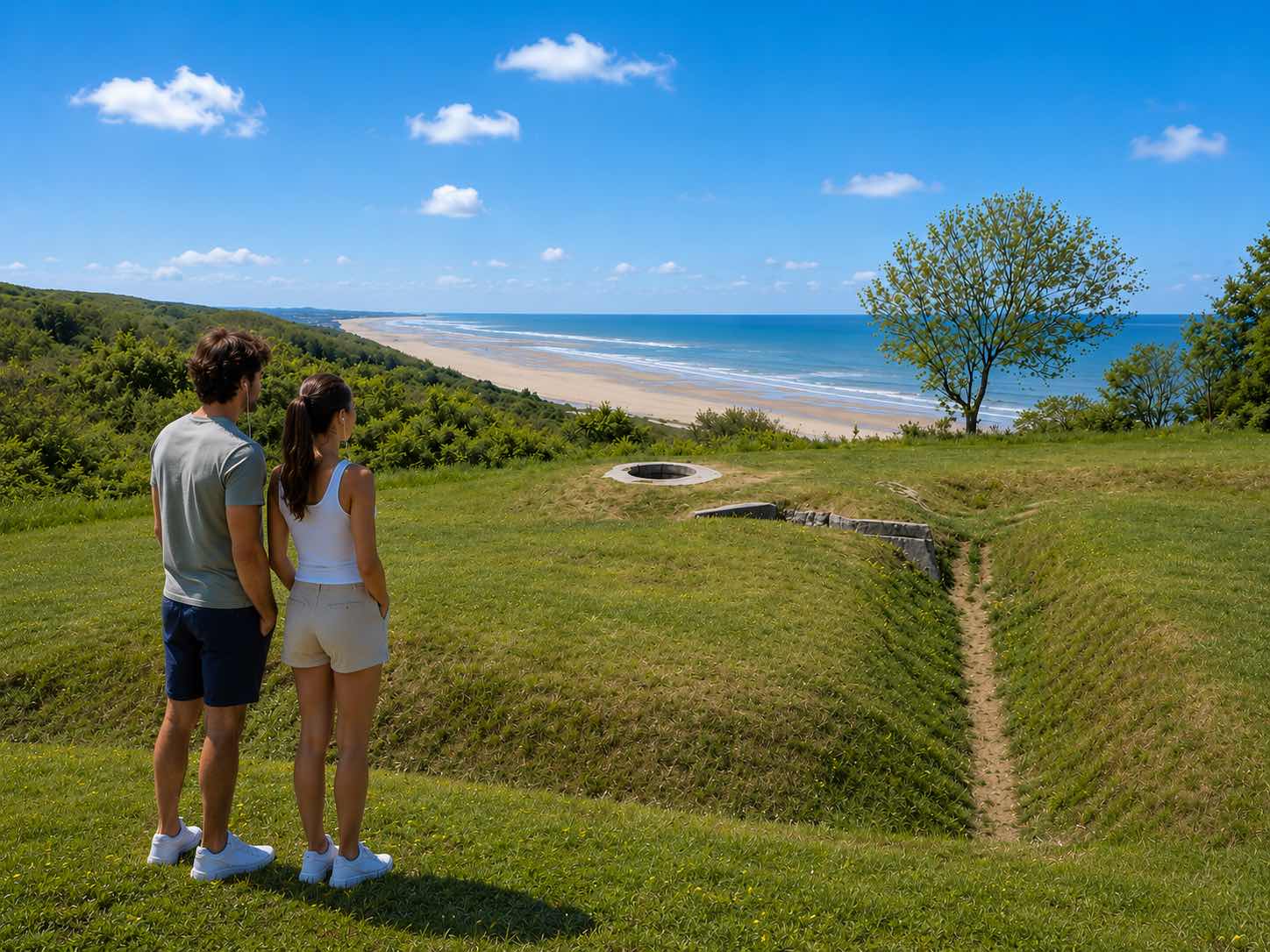
A self-guided Normandy tour is one of the best ways to explore the D-Day landing beaches at your own pace. With a car, a good route and a little planning, you can visit many of the most important Normandy battlefield sites over two memorable days.
This itinerary starts in the American sector, visiting Sainte-Mère-Église, Utah Beach, Pointe du Hoc, Omaha Beach and the Normandy American Cemetery. On day two, the route continues east through the British and Canadian sectors, including Longues-sur-Mer, Arromanches, the British Normandy Memorial, Juno Beach, Sword Beach and Pegasus Bridge.
For most visitors, Bayeux is the ideal base for a self-guided Normandy tour. It is centrally located, close to the D-Day beaches and offers a good choice of hotels, restaurants and historic attractions. Normandy Tourism describes Bayeux as an ideal base for exploring the landing beaches, and the Bayeux Bessin tourist office notes that the five D-Day sectors are easy to access from the area by car.
Why Choose a Self-Guided Normandy Tour?
 A guided tour is a great option if you want detailed commentary, but a self-guided tour with the D-Day Audio Guide gives you flexibility. You can spend longer at the places that matter most to you, start early to avoid crowds and build in time for museums, cafés and quiet reflection.
The D-Day landing beaches stretch across roughly 80 kilometres of coastline, with museums, cemeteries, bunkers, memorials and preserved battlefield sites along the way. The sites listed in this 2 day itinerary are the essential places to understand D-Day and the Battle of Normandy.
This itinerary is designed for travellers who want to cover the key sites in a logical west-to-east route, beginning in the U.S. sector and finishing near Sword Beach.
Where to Stay: Bayeux
 Bayeux is the best place to base yourself for this self-guided Normandy tour. It sits between the American, British and Canadian sectors, making it convenient for both days of the itinerary.
Bayeux also has a charming historic centre, excellent restaurants, the famous Bayeux Tapestry, the Bayeux Cathedral and the Battle of Normandy Museum. Staying here means you can enjoy a pleasant town in the evenings while keeping your driving times manageable during the day.
From Bayeux, you can reach many major D-Day sites in less than an hour, including Omaha Beach, Arromanches, Longues-sur-Mer and the Normandy American Cemetery.
 Before starting your self-guided Normandy tour, we recommend using your hotel Wi-Fi in Bayeux to download the tour content to your phone. Once downloaded, the app works offline, so you can follow the route, listen as history unfolds and access the information without needing mobile data.
Self-Guided Normandy Tour Map Route Overview
Day 1: American SectorBayeux → Sainte-Mère-Église → Utah Beach → Pointe du Hoc → Omaha Beach → Normandy American Cemetery → Bayeux
Approximate total driving time: 2 hours 45 minutes to 3 hours 30 minutes, excluding stops.
Day 2: British and Canadian SectorsBayeux → Longues-sur-Mer → Arromanches → British Normandy Memorial → Juno Beach → Sword Beach → Pegasus Bridge → Bayeux
Approximate total driving time: 2 hours 15 minutes to 3 hours, excluding stops.
Driving times are approximate and can vary depending on season, traffic, parking and how much time you spend at each site.
Day 1: U.S. Sector Self-Guided Normandy Tour
 1. Sainte-Mère-Église
Suggested time on site: 45 minutes to 1.5 hours
Drive from Bayeux: Approximately 45–55 minutes
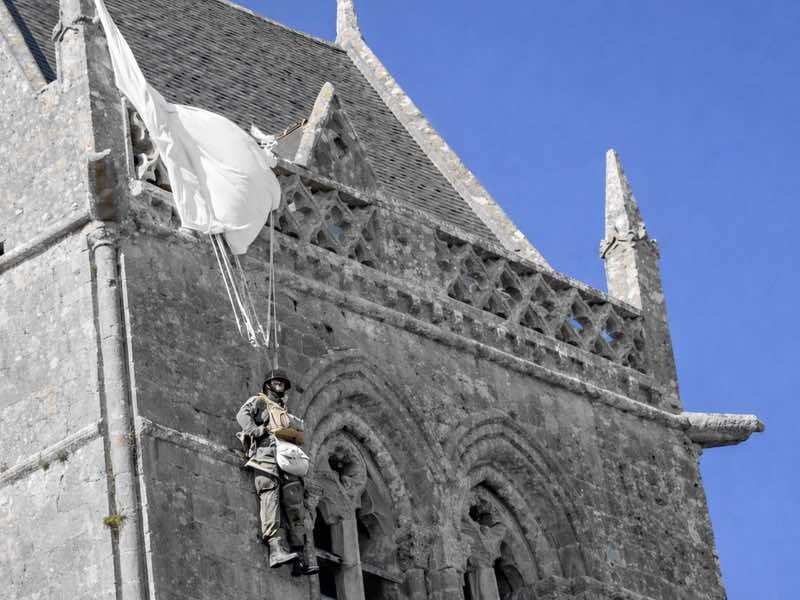
Start your first day in Sainte-Mère-Église, one of the most famous towns connected with the American airborne landings. Paratroopers from the 82nd and 101st Airborne Divisions dropped into this area during the early hours of 6 June 1944, before the seaborne landings began.
The town is best known for the story of paratrooper John Steele, whose parachute became caught on the church tower. Today, the church and town square are key stops on any self-guided Normandy tour.
You may also want to visit the Airborne Museum, which focuses on the U.S. airborne operations around Sainte-Mère-Église.
 2. Utah Beach
Suggested time on site: 45 minutes to 1.5 hours
Drive from Sainte-Mère-Église: Approximately 15–20 minutes
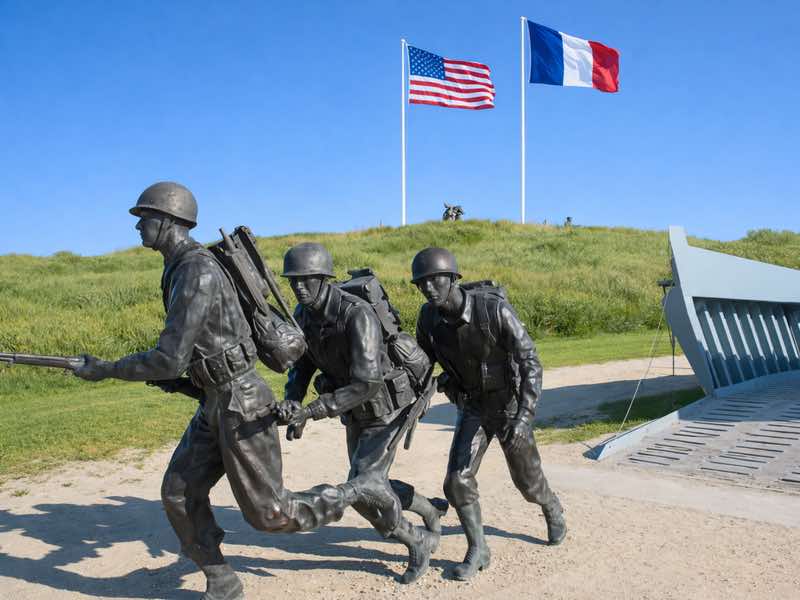
Continue to Utah Beach, the westernmost of the five D-Day landing beaches. Utah Beach is located near Sainte-Mère-Église and Sainte-Marie-du-Mont, making it a natural next stop after visiting the airborne sites inland.
Utah Beach was one of the two American landing beaches on D-Day. Today, the area is quieter and more open than some of the other sectors, which makes it a powerful place to pause and imagine the scale of the landings.
The Utah Beach Landing Museum is located directly by the beach and is a worthwhile stop if you want more context before continuing along the coast.
 3. Pointe du Hoc
Suggested time on site: 45 minutes to 1 hour
Drive from Utah Beach: Approximately 35–45 minutes
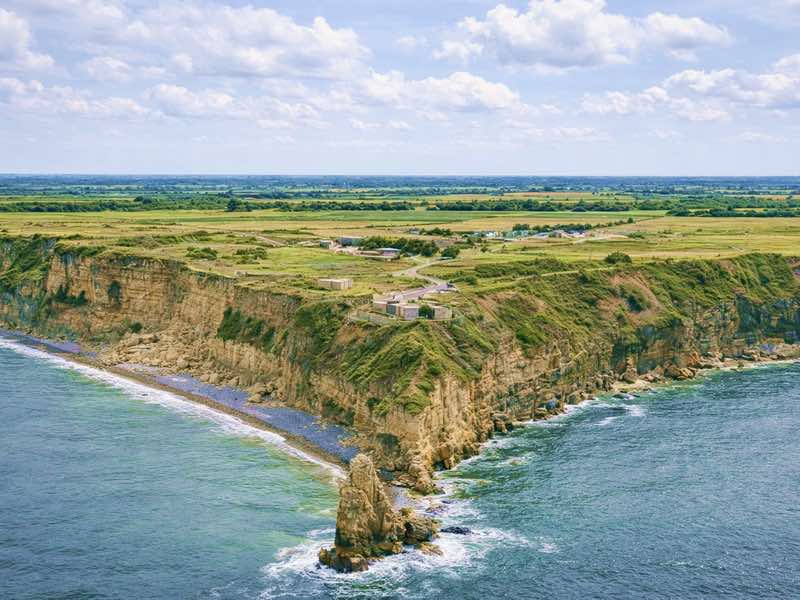
Next, drive east to Pointe du Hoc, one of the most dramatic battlefield landscapes in Normandy. Positioned on cliffs between Utah and Omaha, Pointe du Hoc was assaulted by U.S. Army Rangers on D-Day.
The site still shows the scars of battle, including bomb craters, bunkers and cliffside German positions. It is one of the best places on a self-guided Normandy tour to understand the difficulty of the terrain and the scale of the assault.
Wear comfortable shoes here, as the ground can be uneven.
 4. Omaha Beach
Suggested time on site: 45 minutes to 1 hour
Drive from Pointe du Hoc: Approximately 20–25 minutes
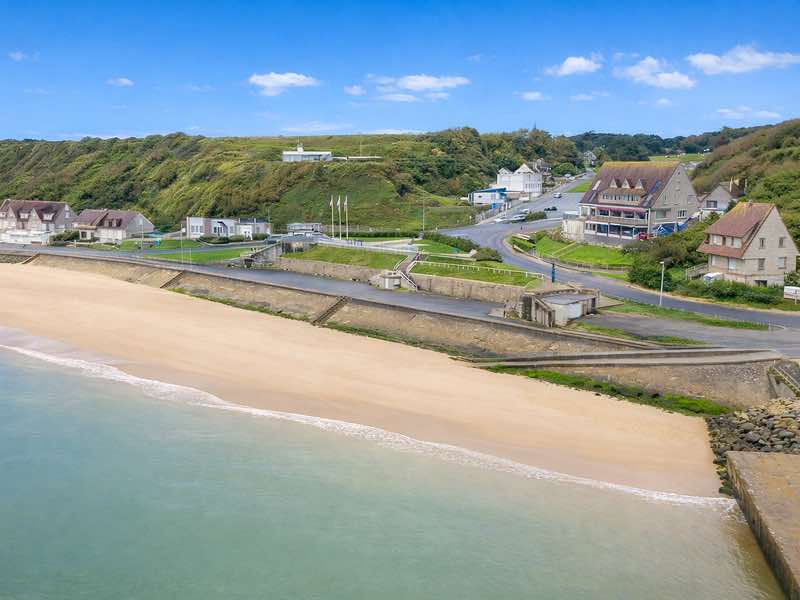
From Pointe du Hoc, continue to Omaha Beach, one of the most significant and moving stops on the route. Omaha was the other American landing beach and saw some of the fiercest fighting on 6 June 1944.
The beach stretches from Vierville-sur-Mer to Colleville-sur-Mer and remains one of the most visited D-Day locations in Normandy. Normandy Tourism identifies Omaha Beach as the American landing site extending along this historic stretch of coastline.
Good places to stop include the beach at Saint-Laurent-sur-Mer, the Les Braves memorial and the viewpoints above the coast.
 5. Normandy American Cemetery
Suggested time on site: 1 to 1.5 hours
Drive from Omaha Beach: Approximately 5–10 minutes
End day one at the Normandy American Cemetery and Memorial in Colleville-sur-Mer. Overlooking Omaha Beach, this is one of the most solemn and important sites in Normandy.
The American Battle Monuments Commission states that the cemetery is located on the site of the temporary American St. Laurent Cemetery, established by the U.S. First Army on 8 June 1944 as the first American cemetery on European soil in World War II.
Allow enough time to walk through the cemetery, visit the memorial, see the reflecting pool and take in the view over Omaha Beach. This is a fitting and reflective end to the first day of your self-guided Normandy tour.
Drive back to Bayeux: Approximately 25–30 minutes.
Day 2: British and Canadian Sector Self-Guided Normandy Tour
 1. Longues-sur-Mer Battery
Suggested time on site: 45 minutes to 1 hour
Drive from Bayeux: Approximately 15–20 minutes
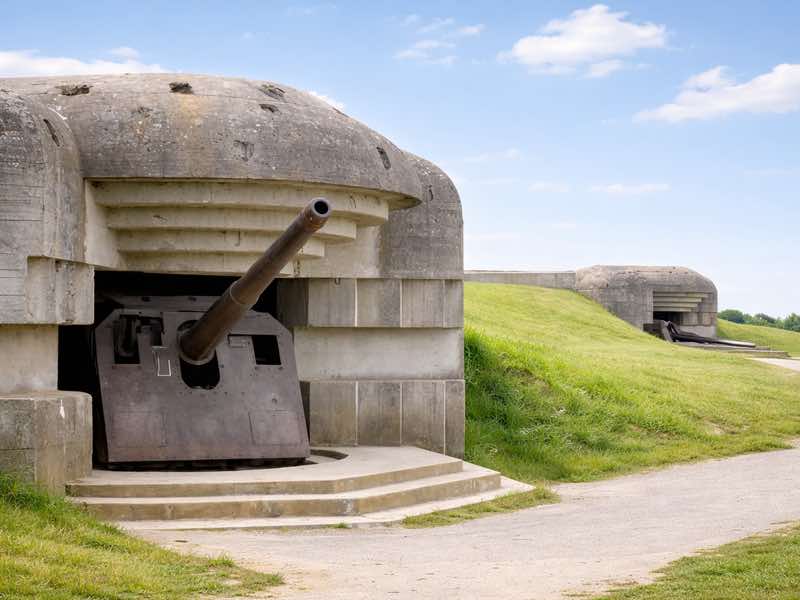
Begin day two at the German coastal battery at Longues-sur-Mer. This is one of the best-preserved artillery positions in Normandy and a useful stop before visiting the British and Canadian sectors.
The site includes concrete casemates and original gun positions facing the English Channel. Because it sits between Omaha and Gold beaches, it also helps connect the American sector from day one with the British sector you will explore on day two.
 2. Arromanches-les-Bains
Suggested time on site: 1 to 2 hours
Drive from Longues-sur-Mer: Approximately 10–15 minutes
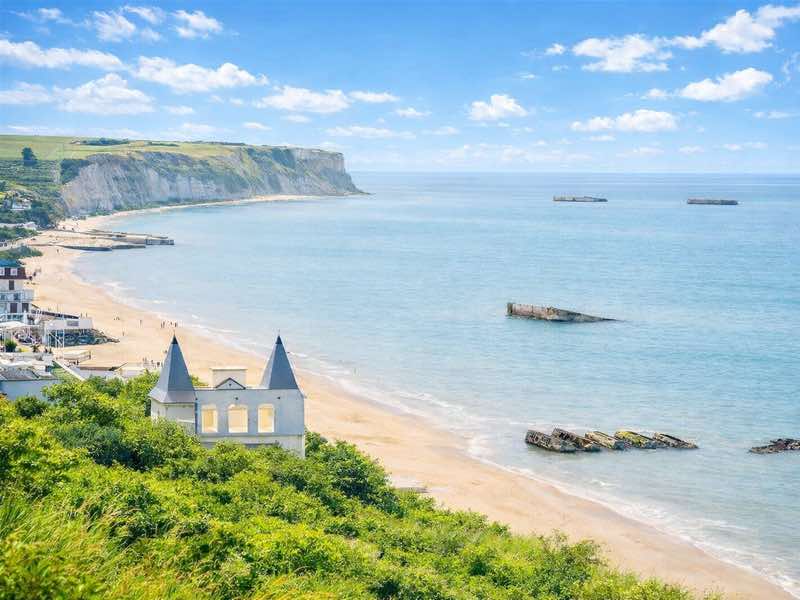
Continue to Arromanches, one of the most fascinating stops on the Normandy coast. This seaside town is closely linked with the artificial Mulberry Harbour built after D-Day to help bring troops, vehicles and supplies ashore.
At low tide, you can still see remains of the harbour offshore. The town also has museums and viewpoints that help explain the engineering achievement behind the Allied supply effort.
Arromanches is a good place to stop for coffee or lunch before continuing east.
 3. British Normandy Memorial
Suggested time on site: 45 minutes to 1 hour
Drive from Arromanches: Approximately 15–20 minutes
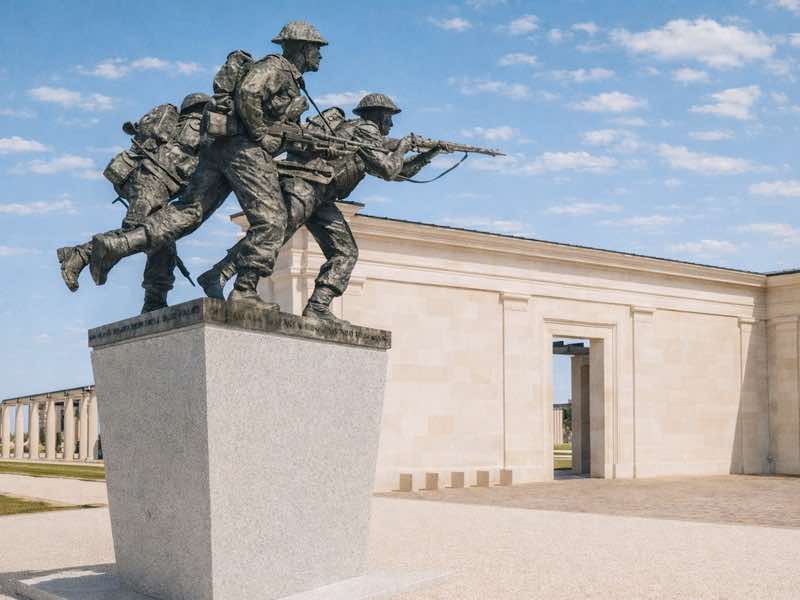
Next, visit the British Normandy Memorial at Ver-sur-Mer. Opened in 2021, the memorial records the names of 22,540 servicemen and women under British command who died on D-Day and during the Battle of Normandy in the summer of 1944.
The memorial overlooks Gold Beach and is one of the most moving newer remembrance sites in Normandy. Its open setting and sea views make it a peaceful but powerful stop on a self-guided tour.
4. Juno Beach – Courseulles-sur-Mer
 Suggested time on site: 1 to 2 hours
Drive from British Normandy Memorial: Approximately 20–25 minutes
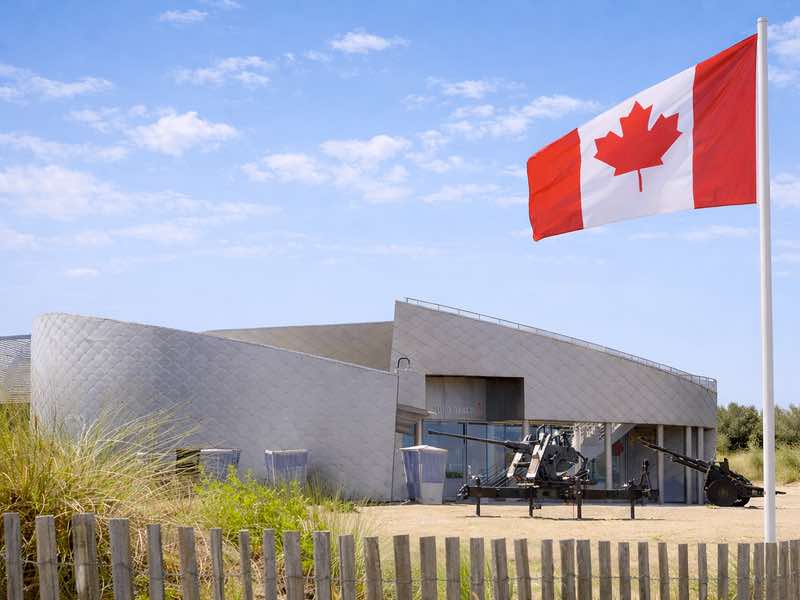
Continue to Juno Beach, the Canadian landing sector. The best place to focus your visit is Courseulles-sur-Mer, home to the Juno Beach Centre.
The Juno Beach Centre is the only Canadian museum on the D-Day landing beaches. It presents Canada’s military and civilian contribution during the Second World War and pays tribute to the Canadians who died during the conflict, including those killed during the Battle of Normandy and on D-Day.
This is one of the most important stops for Canadian visitors, but it is also highly recommended for anyone wanting a fuller understanding of the Allied landings beyond the American sector.
 5. Sword Beach – Ouistreham Riva-Bella
Suggested time on site: 45 minutes to 1 hour
Drive from Courseulles-sur-Mer: Approximately 35–45 minutes
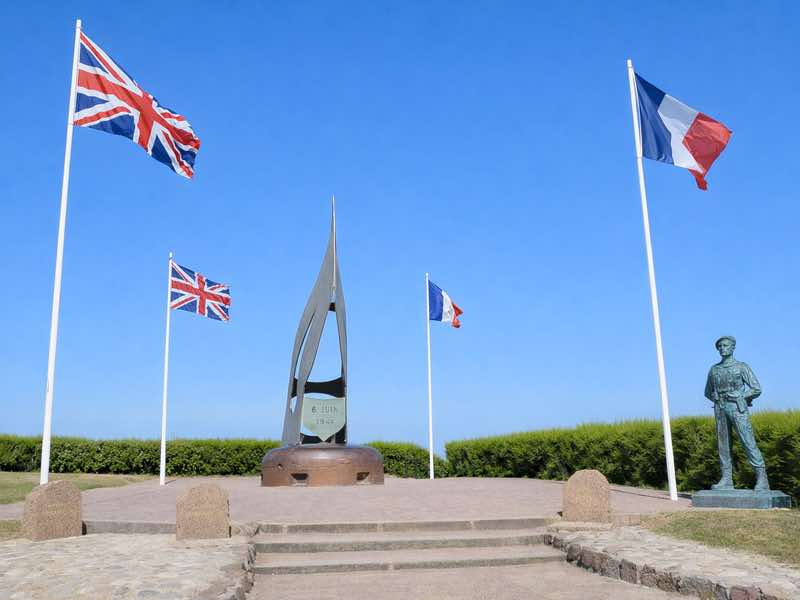
From Juno Beach, continue east to Sword Beach, the easternmost of the five D-Day landing beaches. The best area to visit is Ouistreham Riva-Bella, where British forces landed on 6 June 1944.
Sword Beach gives you a sense of the eastern edge of the invasion area and pairs naturally with the final stop of the day, Pegasus Bridge. You can walk along the seafront, visit memorials and see how close the landing beach is to the route inland toward Caen.
 6. Pegasus Bridge
Suggested time on site: 45 minutes to 1.5 hours
Drive from Sword Beach: Approximately 15–20 minutes
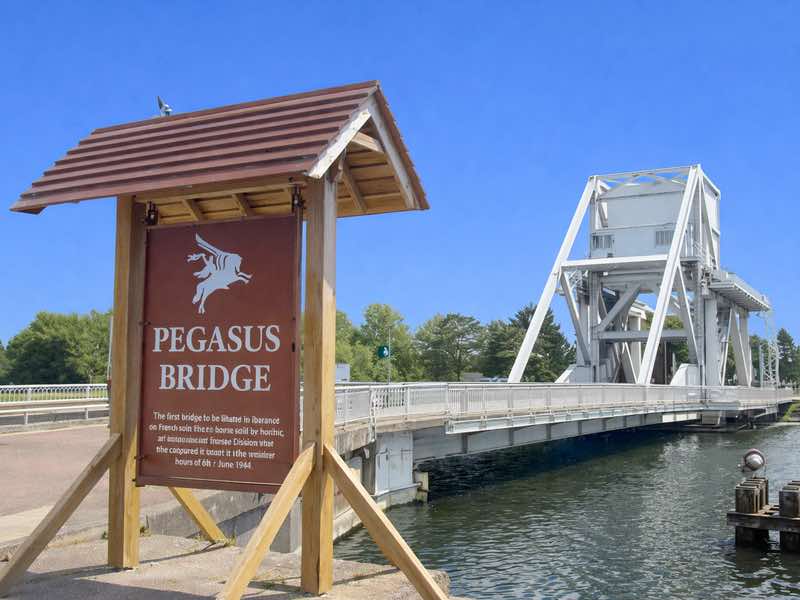
Finish your self-guided Normandy tour at Pegasus Bridge, one of the most famous British airborne sites of D-Day. The bridges at Bénouville and Ranville were captured in the early hours of 6 June 1944 by British airborne forces, and the canal bridge was later renamed Pegasus Bridge in honour of the Pegasus emblem worn by the airborne troops.
You can visit the bridge area and the nearby Pegasus Memorial Museum, which tells the story of the airborne operation and displays the original bridge.
This is a strong final stop because it brings the itinerary full circle: from the airborne landings in Sainte-Mère-Église on day one to the British airborne operation at Pegasus Bridge on day two.
Drive back to Bayeux: Approximately 35–45 minutes.
Tips for Planning Your Self-Guided Normandy Tour
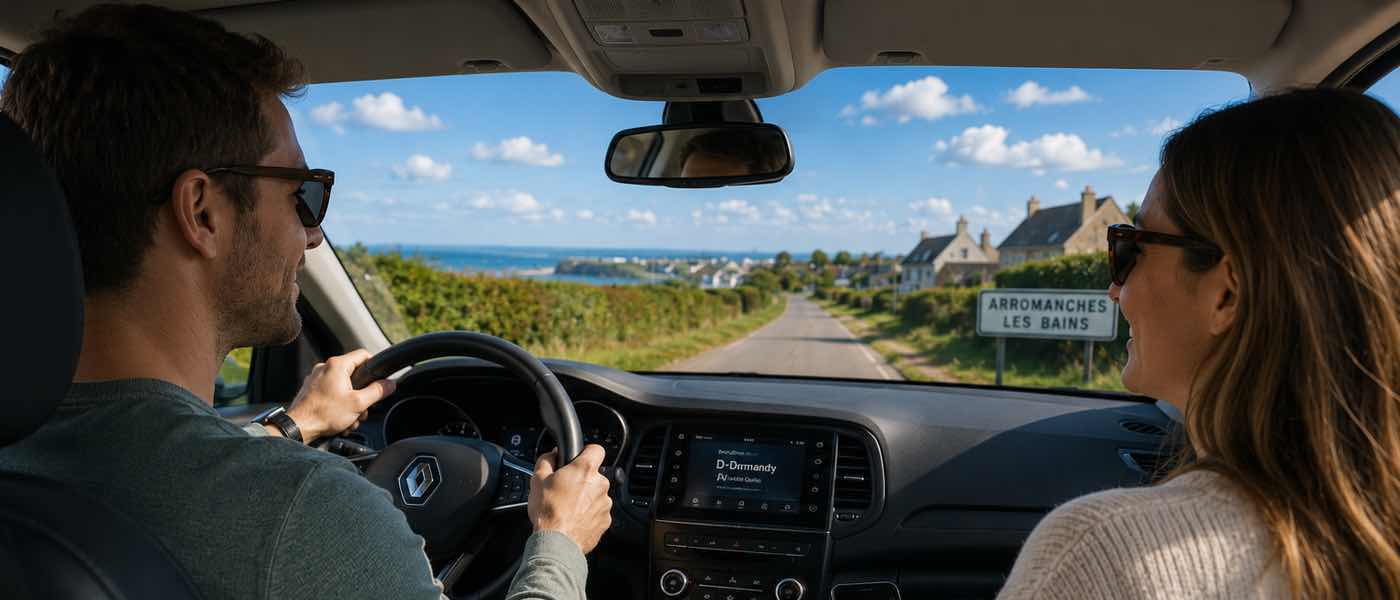 A car is strongly recommended for this itinerary. Public transport is limited around many of the beaches and battlefield sites, especially if you want to visit several places in one day.
Start early, especially in spring and summer. Some museums and cemeteries have set opening hours, and parking can be busier around major commemorative dates.
Do not try to rush every museum. This itinerary is designed around the key outdoor sites, beaches and memorials. Choose one or two museums each day if you want a deeper visit.
Check tide times if you want to walk on the beaches or see harbour remains at Arromanches. The landscape can look very different at high and low tide.
Allow quiet time at the cemeteries and memorials. These are not just tourist stops; they are places of remembrance.
Frequently Asked Questions
Can you tour Normandy without a guide?
Yes, you can tour Normandy without a guide. A self-guided Normandy tour works well if you have a car, a planned route and enough time at each stop. However, a guide can add valuable historical detail if you want a deeper battlefield explanation.
How many days do you need for a self-guided Normandy tour?
Two days is enough to see the main D-Day landing beaches and key memorial sites. If you want to visit several museums in depth, consider staying three or four days.
Is Bayeux a good base for visiting the D-Day beaches?
Yes. Bayeux is one of the best bases for visiting the D-Day beaches because it is central, historic and close to many major sites. It also has a good range of hotels, restaurants and visitor services.
Can you visit Utah Beach and Omaha Beach in one day?
Yes. Utah Beach and Omaha Beach can be visited in one day from Bayeux, especially when combined with Sainte-Mère-Église, Pointe du Hoc and the Normandy American Cemetery.
What is the best order to visit the Normandy beaches?
For a two-day self-guided itinerary, a practical route is to start in the west with the American sector, then travel east through the British and Canadian sectors. This means visiting Utah and Omaha on day one, then Gold, Juno and Sword on day two.
Final Thoughts
A self-guided Normandy tour gives you the freedom to experience the D-Day beaches in a personal and meaningful way. By basing yourself in Bayeux and following a west-to-east route, you can visit the most important American, British and Canadian sites over two well-planned days.
From Sainte-Mère-Église and Utah Beach to Omaha, Arromanches, Juno Beach, Sword Beach and Pegasus Bridge, this itinerary offers a powerful introduction to the history, sacrifice and legacy of D-Day in Normandy.
 We have shown you this itinerary as a west to east plan. Of course, you can do the tour from east to west if you prefer. Simply reverse the order of the itinerary shown above. As you are doing a self guided tour, you have the flexibility to alter the plan to suit your time, interests and requirements.