


Article
What Is the Best Way to Visit the D-Day Beaches?
Visiting the D-Day beaches in Normandy is not like visiting a normal tourist attraction. The sites are spread across a large area, the history is complex, and many of the most powerful places are easy to miss without context.
The five landing beaches — Utah, Omaha, Gold, Juno and Sword — stretch across the coast of Normandy, with museums, cemeteries, batteries, memorials and villages connected to the events of 6 June 1944 and the Battle of Normandy. Normandy Tourism describes the area as an “open-air museum,” with landscapes that still carry traces of the war.
So, what is the best way to visit the D-Day beaches?
The honest answer is: it depends on how you like to travel.
Some visitors prefer a professional guide. Others like a traditional guidebook. Some focus on museums and use their audio guides. Others want a flexible GPS audio guide they can use while driving between the beaches.
This page compares the main options clearly, so you can choose the best way to explore the Normandy landing beaches.
Option 1: Guided Tours of the D-Day Beaches
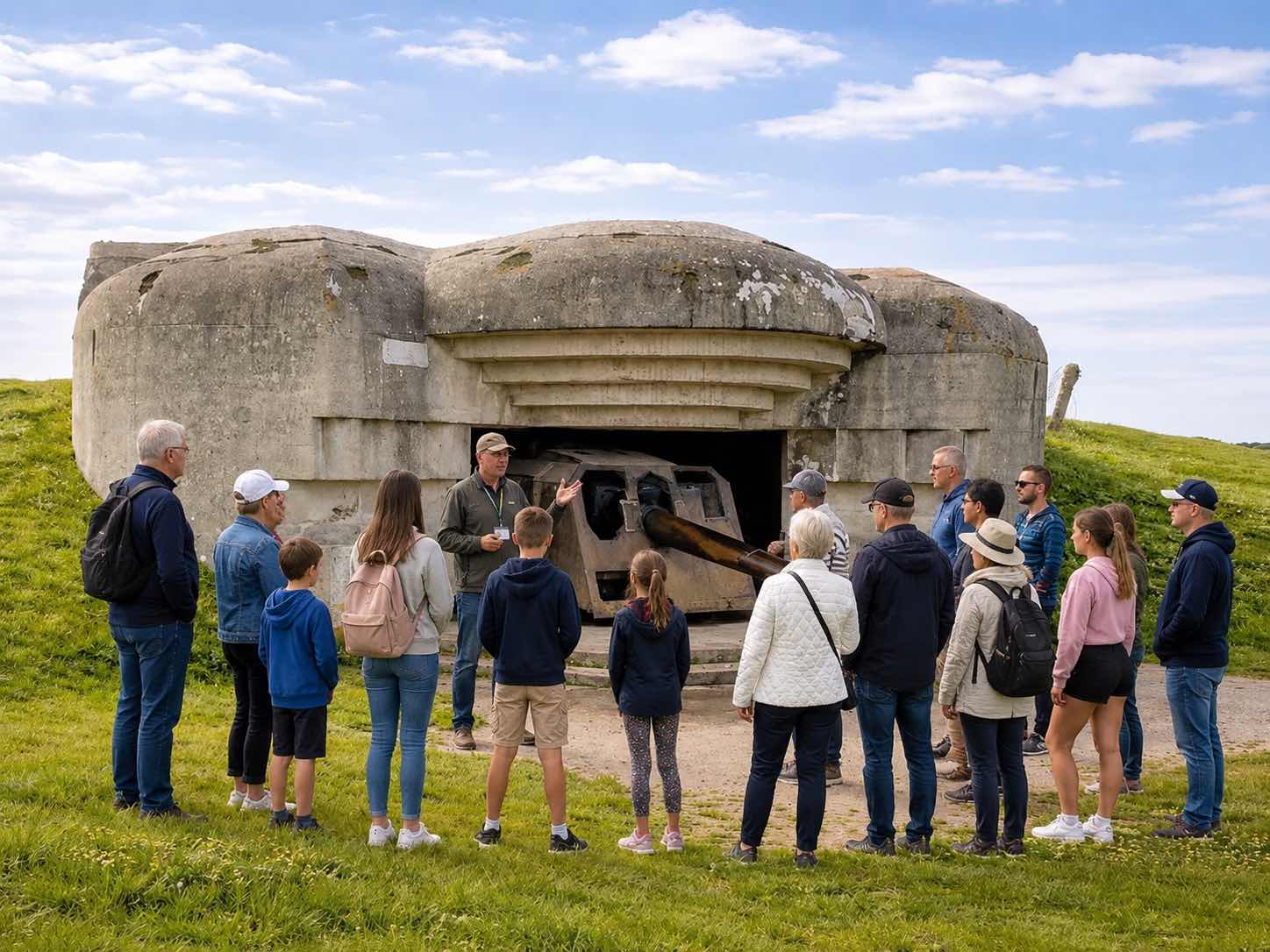 A guided tour is often the best choice if you want the most personal and detailed explanation of the D-Day sites.
A good guide can connect the beaches, cemeteries, bunkers, museums and small villages into one clear story. This is especially useful because many important D-Day locations are not immediately obvious when you arrive. A field, a crossroads or a quiet stretch of coastline may have played a major role in the battle.
Guided tours are also helpful if you are short on time. Many tours from Bayeux, Caen or Paris focus on the main sites such as Omaha Beach, Pointe du Hoc, the Normandy American Cemetery, Sainte-Mère-Église, Utah Beach or the British and Canadian sectors.
Best for
Guided tours are ideal for first-time visitors, history enthusiasts, families who want a structured day, and anyone who prefers asking questions rather than reading or listening alone.
Possible drawbacks
Guided tours are usually the most expensive option. You also follow a fixed schedule, which means less freedom to stop for longer at a museum, cemetery or viewpoint. Group tours can sometimes move quickly, while private tours can cost significantly more.
Option 2: Paper Guidebooks
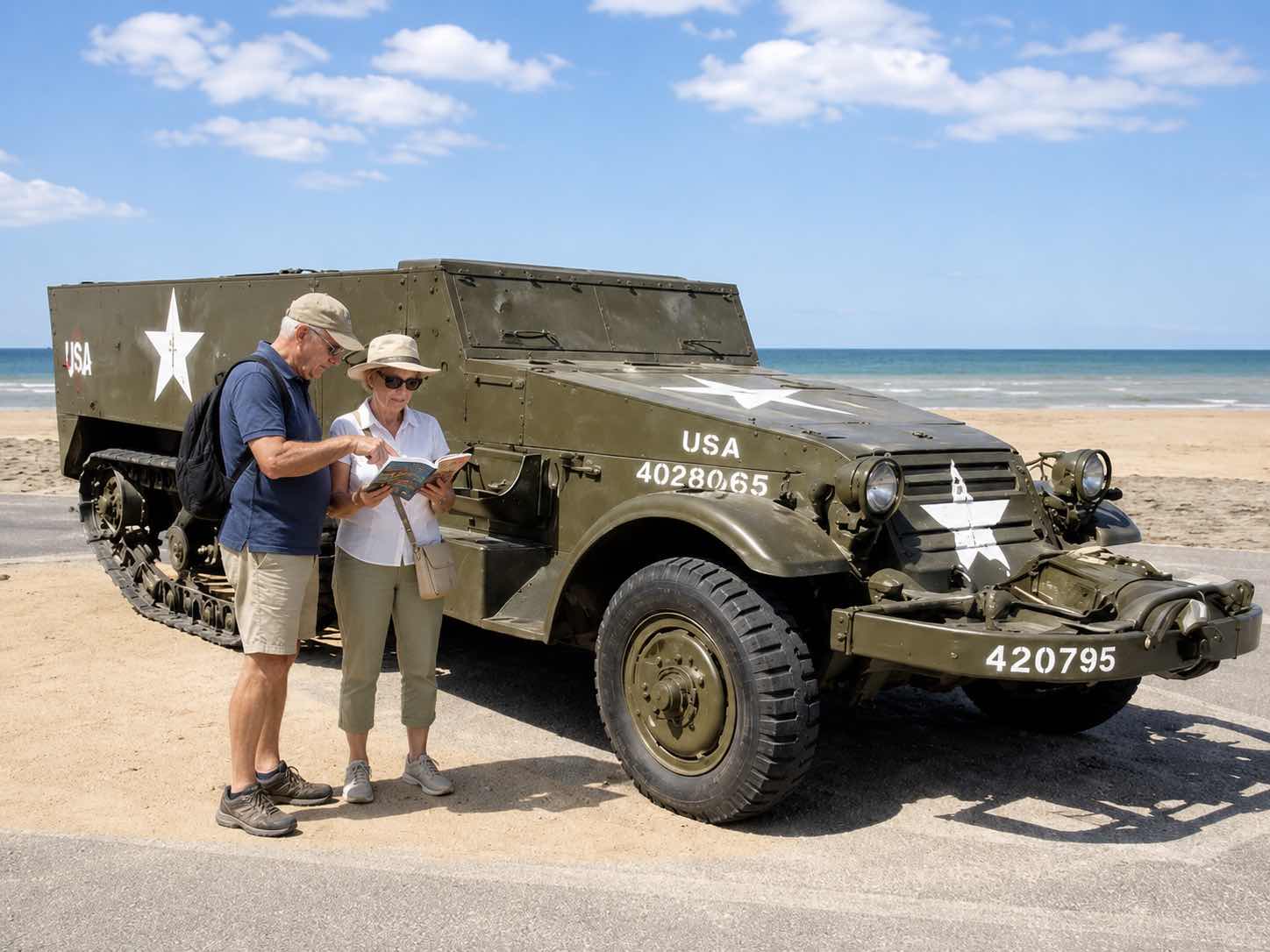 A paper guidebook is still a useful way to visit the Normandy D-Day beaches, especially if you enjoy reading before or during your trip.
Guidebooks are good for background history, maps, suggested routes and practical planning. They can help you understand the wider picture before you arrive, including the difference between the American, British and Canadian landing sectors.
They also work without battery, signal or mobile data, which can be useful when travelling through rural parts of Normandy.
Best for
Paper guidebooks are best for travellers who like to prepare in advance, read at their own pace, mark pages, and keep a physical reference during the trip.
Possible drawbacks
Guidebooks can be difficult to use while driving. They also cannot react to your exact location, play audio automatically, or guide you from site to site. Some guidebooks may also become outdated when opening hours, access rules or visitor information changes.
Normandy Tourism updates its official D-Day visitor guide every two years, which shows how important current information can be when planning a visit.
Option 3: Museum Audio Guides
Museum audio guides are useful once you are inside a specific museum or visitor centre.
Many D-Day museums in Normandy are excellent at explaining one part of the story in depth. For example, the Memorial Museum of the Battle of Normandy in Bayeux presents the key phases of the fighting and the advance of Allied forces after the landings.
Museum audio guides can make these visits easier to follow, especially when exhibits contain a lot of documents, maps, objects and personal stories.
Best for
Museum audio guides are best for visitors who want a deeper understanding of one specific site, museum collection or battle sector.
Possible drawbacks
A museum audio guide usually only works inside that museum. It will not guide you while driving between Omaha Beach, Utah Beach, Pointe du Hoc, Sainte-Mère-Église, Arromanches, Pegasus Bridge or the cemeteries. It also may not help much when you are standing outside on the beaches themselves.
Option 4: GPS Audio Guides and D-Day Beach Apps

A GPS audio guide is designed for visitors who want to explore independently while still getting historical context at the right moment.
Instead of reading from a book or following a person with a flag, you use your phone as you travel between sites. The app can help explain where you are, what happened there, and why the location matters.
This type of app is especially useful in Normandy because the D-Day sites are spread across several towns, beaches and inland locations. Normandy Tourism’s D-Day map includes a large number of museums, cemeteries and memorial sites across the landing sectors, which can make planning difficult without a clear route.
Best for
GPS audio guides are best for independent travellers, road trippers, couples, families, and visitors who want flexibility without visiting the beaches completely “blind.”
They are also useful if you have a rental car and want to explore at your own pace.
Possible drawbacks
A GPS audio guide is not the same as a human guide. You cannot ask it questions, change the explanation to match your family history, or have a specialist adapt the day around your interests.
So, Where Does Our App Fit?
Our D-Day Audio Guide app is not meant to replace every other way of visiting the D-Day beaches.
It is for people who want more context than road signs and plaques can provide, but who do not necessarily want to join a group tour. It is also for visitors who want to drive the Normandy beaches independently, while still understanding the history of the places they are seeing.
With the app, you can:
- follow the story of D-Day as you move through Normandy
- understand the importance of each beach, village, cemetery and battlefield site
- travel at your own pace
- pause whenever you want
- spend longer at the places that matter most to you
- avoid feeling lost between major sites
It is especially helpful if you are visiting Omaha Beach, Utah Beach, Pointe du Hoc, Sainte-Mère-Église, Arromanches, the American Cemetery, Pegasus Bridge, Juno Beach, Gold Beach or Sword Beach as part of a self-guided trip.
The app is not the best choice if you want a fully personalised battlefield study with a professional historian. In that case, a private guide may be better.
It is also not a replacement for visiting museums. Museums add depth, original objects, films, maps and personal stories that are worth experiencing in person.
But if you want a flexible, self-guided way to understand the D-Day beaches while travelling through Normandy, a GPS audio guide app can be one of the most practical options.
Which Option Should You Choose?
Choose a guided tour if you want personal interaction and a structured day.
Choose a paper guidebook if you enjoy reading, planning and having a physical reference.
Choose museum audio guides if you want a deeper experience inside individual museums.
Choose our GPS D-day audio guide app if you want to explore independently, drive between sites, and hear the history as you travel.
For many visitors, the best experience is actually a combination: read a little before you go, visit at least one museum, and use either a guide or GPS audio guide to connect the beaches, cemeteries and battlefield sites into one meaningful journey.
Final Thought
There is no single “best” way to visit the D-Day beaches in Normandy.
The right choice depends on your budget, your time, your interest in history, and how much freedom you want during the day.
Our app is designed for travellers who want a respectful, informative and flexible way to explore the Normandy landing beaches without turning the visit into a rushed checklist or a sales pitch.
It helps you understand where you are, what happened there, and why these places still matter.