



Article
Sainte-Mère-Église Self Guided Tour With the D-Day Audio Guide App
 Sainte-Mère-Église is one of the most famous D-Day towns in Normandy and an essential stop for anyone exploring the story of the American airborne landings. In the early hours of 6 June 1944, U.S. paratroopers from the 82nd and 101st Airborne Divisions landed around the village as part of the wider Allied invasion of Normandy.
Today, Sainte-Mère-Église is known for its church, its village square, its airborne museum and the unforgettable story of paratrooper John Steele. It is a place where visitors can stand in the heart of the village and connect directly with the events of 6 June 1944.
Our Sainte-Mère-Église audio guide app helps you explore the village and surrounding battlefield locations with clear, engaging commentary. Instead of simply walking through the square and reading a few signs, you can listen to the stories behind the places you are seeing — from the parachute drops and the fighting in the village to the nearby causeways, bridges and memorials that shaped the airborne battle.
Whether you are visiting Sainte-Mère-Église as part of a wider Normandy D-Day tour or planning a dedicated stop in the village, the app gives you the freedom to explore at your own pace.
Why Visit Sainte-Mère-Église?
Sainte-Mère-Église was one of the first towns in Normandy to be liberated during the D-Day operations. Its location made it strategically important: the Allies needed to secure roads, crossroads and access routes behind Utah Beach so that landing troops could move inland after coming ashore.
The town is especially associated with the American airborne forces. The Airborne Museum, located in the heart of Sainte-Mère-Église opposite the church, is dedicated to the U.S. paratroopers of the 82nd and 101st Airborne Divisions and covers the events of D-Day from preparation in England through to the battle for Normandy.
For many visitors, Sainte-Mère-Église is also one of the most atmospheric D-Day sites in Normandy. The church square is compact and easy to explore on foot, while nearby sites such as La Fière, Utah Beach and the surrounding drop zones make it a strong base for understanding the airborne side of Operation Overlord.
Stories Featured in the Audio Guide
The Paratroopers Arrive Over Normandy
In the darkness before dawn on 6 June 1944, American paratroopers were dropped across the countryside around Sainte-Mère-Église. Their mission was to disrupt German movements, seize key routes and help protect the forces landing at Utah Beach.
The audio guide explains why airborne troops were sent in before the beach landings and what made their mission so dangerous. Scattered drops, flooded fields, darkness and enemy fire meant that many paratroopers landed far from their intended zones. As you move through the village and surrounding area, the app helps connect the landscape with the reality of that night.
 John Steele and the Church Tower
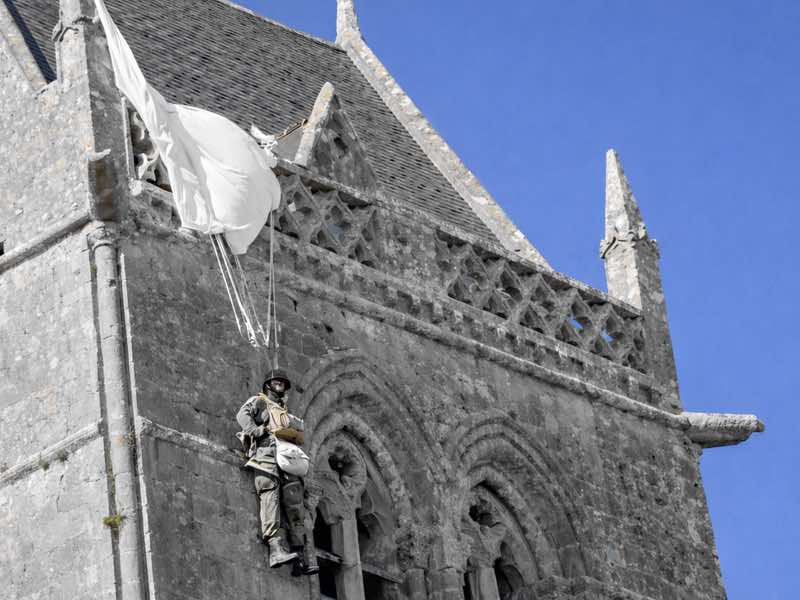
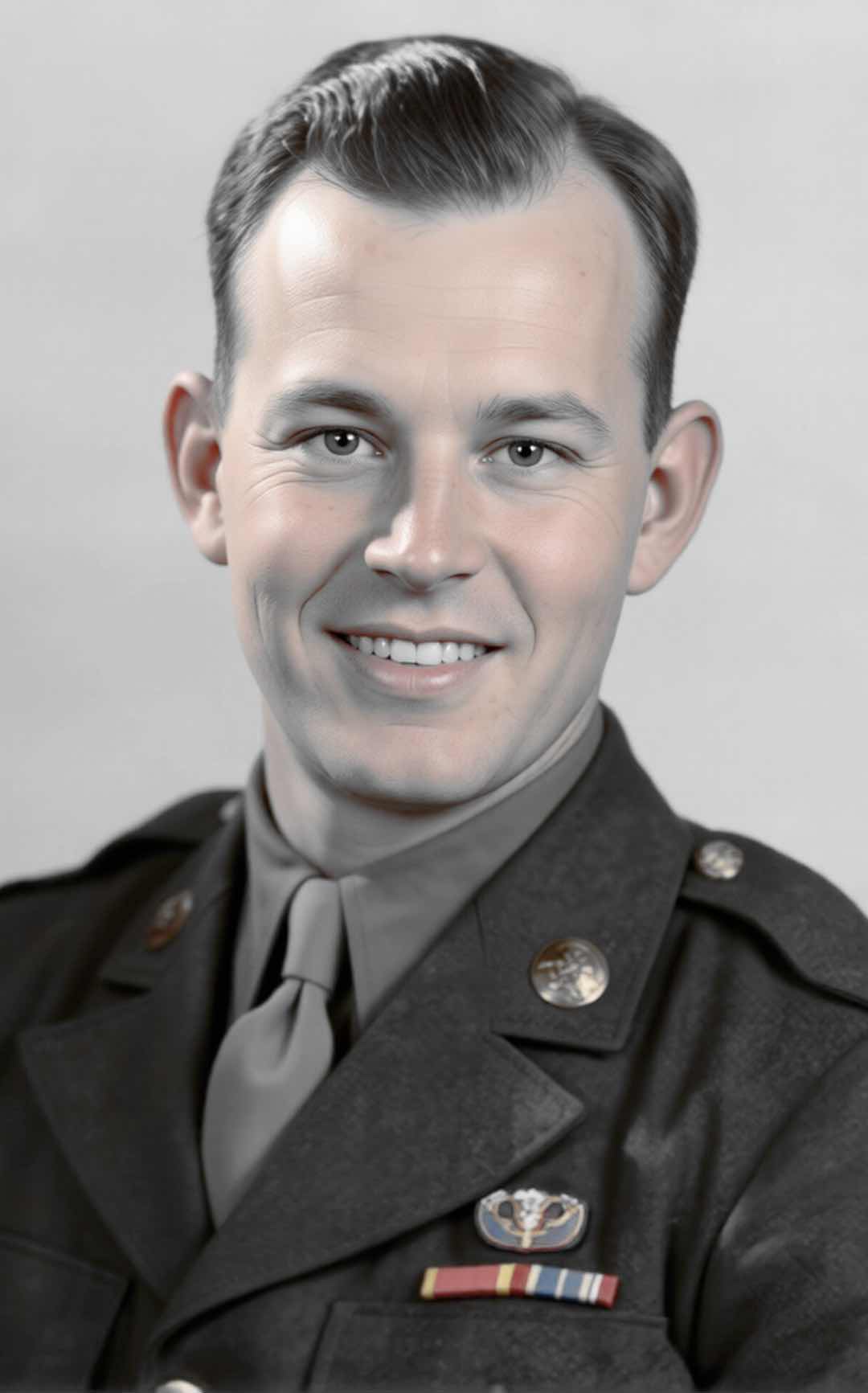
The most famous story in Sainte-Mère-Église is that of John Steele, an American paratrooper from the 82nd Airborne Division. During the night drop, his parachute became caught on the church tower, leaving him suspended above the square while fighting continued below. His story became widely known through the film The Longest Day, and today a parachute figure on the church helps visitors visualise the event.
The audio guide places this story in context. Rather than treating it as a single dramatic image, it explains what was happening in the village, why the landings were so chaotic and how individual stories like Steele’s became part of the wider memory of D-Day.
The Church Square and the Fight for the Village
The church square is the centre of modern Sainte-Mère-Église, but on D-Day it was a place of confusion, danger and intense activity. Fires, gunfire, scattered landings and German positions all shaped the events of the night.
With the app, visitors can stand in the square and understand how the layout of the village mattered. The commentary explains where troops landed, why the square became so important and how Sainte-Mère-Église became linked forever with the story of the airborne assault.
The Airborne Museum
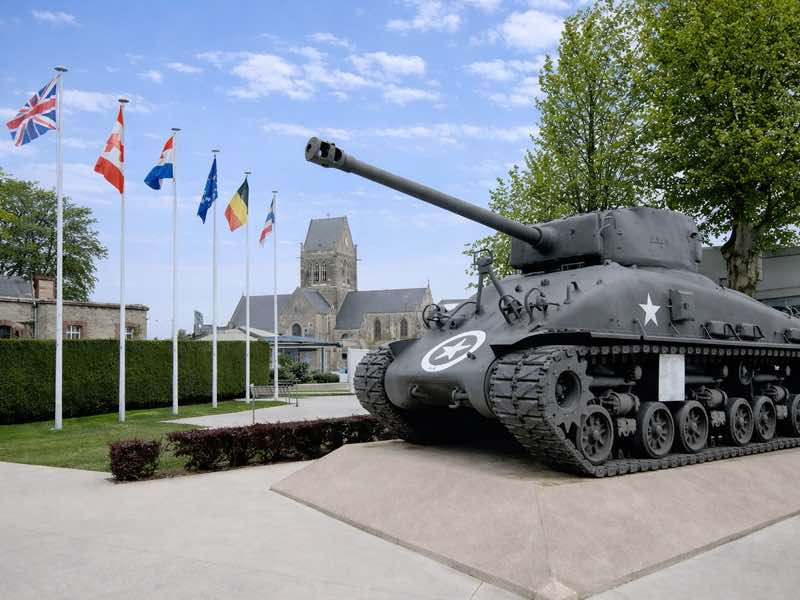 The Airborne Museum is one of the main visitor attractions in Sainte-Mère-Église. Opened in 1962, it is dedicated to the American airborne troops who fought in Normandy. Its displays include aircraft, immersive exhibitions and material connected to the 82nd and 101st Airborne Divisions.
The audio guide works well alongside a museum visit. Visitors can use the app before entering the museum to understand the village, or afterwards to explore the real locations connected to the stories they have just seen inside.
What You Can See in Sainte-Mère-Église
Sainte-Mère-Église Church
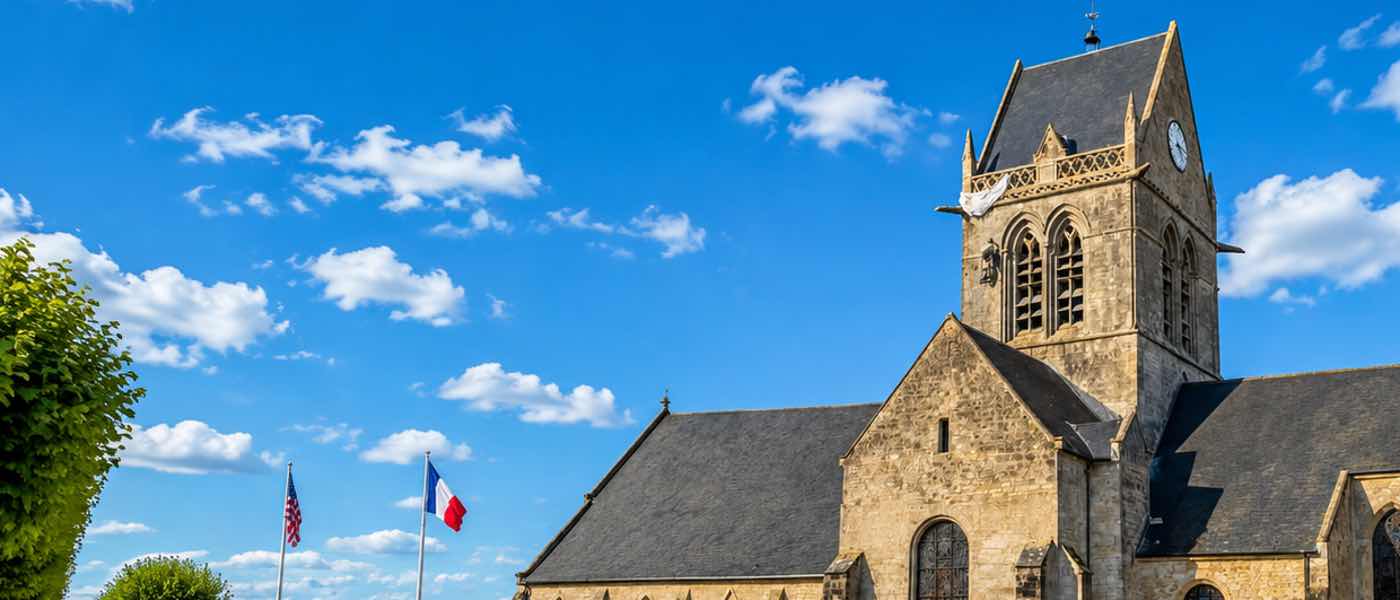
The church is the most recognisable landmark in the village. It is closely linked to the story of John Steele and remains one of the most photographed D-Day sites in Normandy.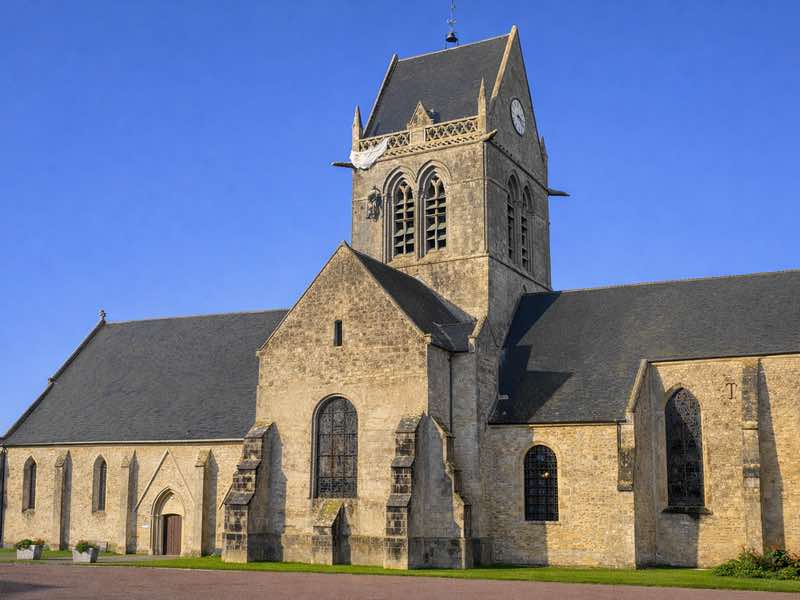
The Village Square
The square is the natural starting point for your visit. From here, you can see the church, access the Airborne Museum and begin to understand the layout of the village.
Airborne Museum
Located close to the church, the Airborne Museum is dedicated to the airborne troops and the events of D-Day. It is one of the best places in Normandy to learn about the American paratroopers who landed behind enemy lines.
How the D-Day Audio Guide App Helps
The history of Sainte-Mère-Église is powerful, but it can be difficult to piece together if you are visiting without a guide. The church, museum, square and nearby battlefield sites all tell part of the story, but the audio guide helps bring them together.
With the app, you can listen to the story of Sainte-Mère-Église as you walk through the village, understand the role of the 82nd and 101st Airborne Divisions, learn about John Steele and the famous church tower, explore nearby battlefield sites such as La Fière, and visit at your own pace without joining a fixed tour group.
The app is designed for travellers who want more than a quick photo stop. It gives context, atmosphere and direction, helping you understand why Sainte-Mère-Église remains one of the most important D-Day locations in Normandy.
How to Get to Sainte-Mère-Église
Sainte-Mère-Église is located in the Manche department of Normandy, inland from Utah Beach and north of Carentan. It is easiest to visit by car, especially if you want to combine the village with nearby D-Day sites such as Utah Beach, La Fière, Carentan or Pointe du Hoc.
By Car
Sainte-Mère-Église is accessible from the N13, the main road linking Cherbourg and Caen. Driving is the most flexible option, especially for visitors following a wider Normandy battlefield route.
Approximate driving times are around 15–20 minutes from Carentan, 30–40 minutes from Cherbourg, 45–60 minutes from Bayeux, and around 1 hour from Caen, depending on traffic and the exact route.
By Train
Sainte-Mère-Église does not have a major railway station in the village centre. The nearest useful rail connections are usually Carentan or Valognes, depending on where you are travelling from.
From Paris, many visitors travel by train to Carentan or Bayeux and then continue by car, taxi, bus or organised tour.
By Bus
Public transport options can be limited, especially if you want to visit several battlefield sites in one day. It is best to check current local bus schedules before travelling, as services may vary by season and day of the week.
Parking
Parking is available in and around Sainte-Mère-Église, especially near the village centre and museum area. During peak D-Day anniversary periods in early June, the village can be much busier than usual, so it is sensible to arrive earlier in the day.
Map of Sainte-Mère-Église
Sainte-Mère-Église is located in western Normandy, close to Utah Beach and within easy reach of several major D-Day sites. Its position makes it a useful stop for visitors exploring the American landing sectors and the airborne operations that took place behind the beaches.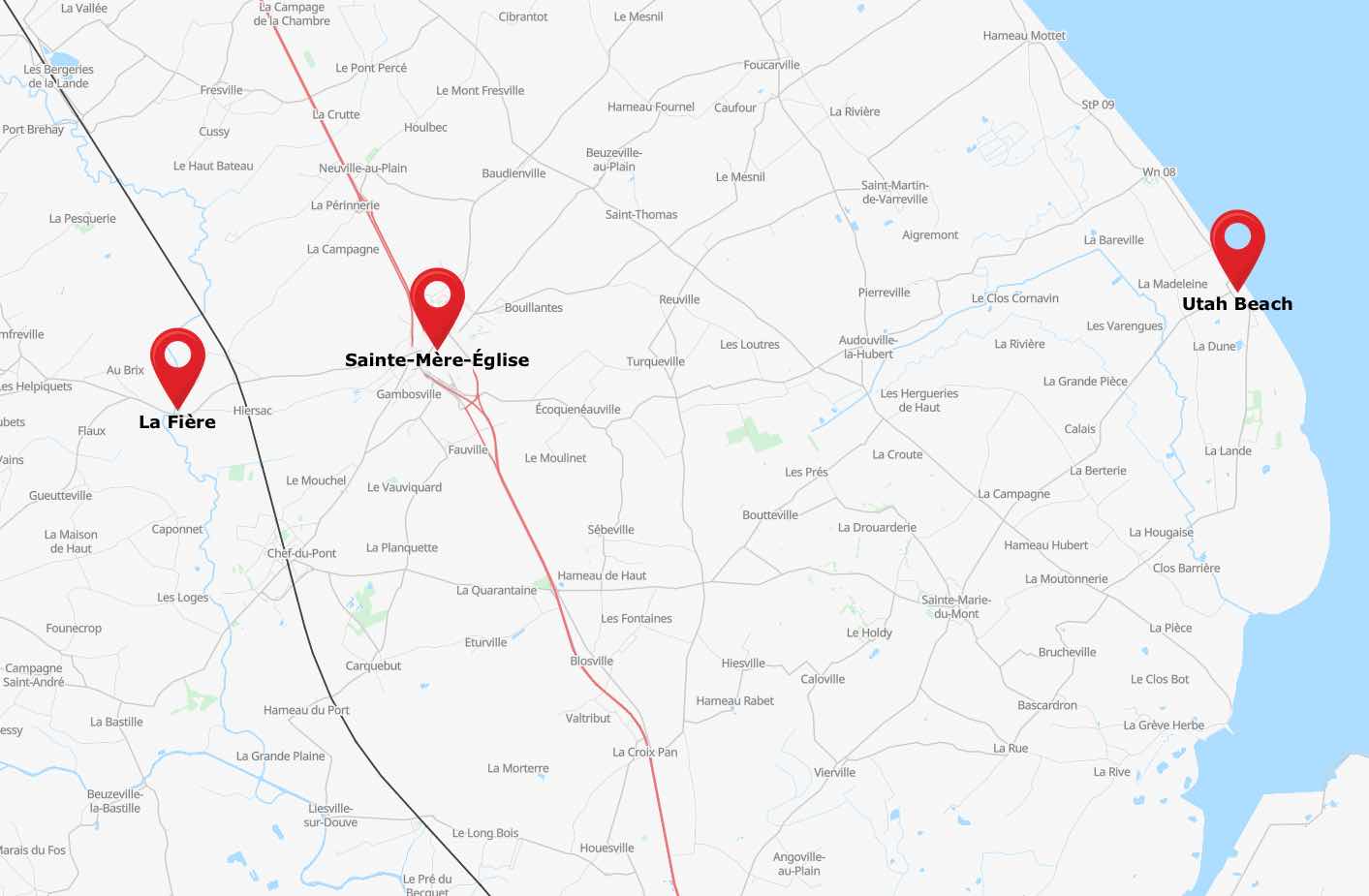
A map of Sainte-Mère-Église can help you plan your route around the village, locate the church square, find the Airborne Museum and identify nearby battlefield sites such as La Fière and Utah Beach. Many visitors start in the centre of the village before driving to the surrounding locations connected with the airborne landings.
Suggested Visit Itinerary
Short Visit: 1–2 Hours
Start in the church square, view the church and John Steele memorial, then listen to the relevant audio guide stops around the centre of the village. This is ideal if you are visiting Sainte-Mère-Église as part of a wider D-Day day trip.
Half-Day Visit
Spend time in the village square, visit the Airborne Museum, then use the app to explore the story of the airborne landings in more detail. This gives you enough time to understand both the famous stories and the wider military importance of the town.
Full-Day D-Day Route
Combine Sainte-Mère-Église with La Fière, Utah Beach and other nearby Normandy battlefield sites. This is the best option if you want to follow the journey from the airborne drops inland to the landings on the coast.
Nearby D-Day Sites to Add to Your Route
Utah Beach
Utah Beach was one of the five D-Day landing beaches and is closely connected to the airborne operations around Sainte-Mère-Église. Visiting both locations helps explain how the troops landing by sea and the paratroopers landing inland supported the same wider objective.
La Fière
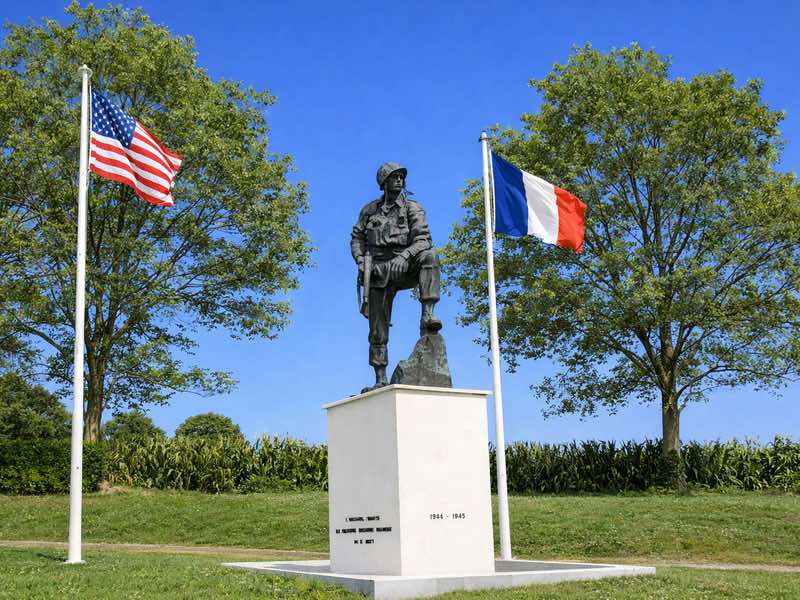 A few kilometers west of Sainte-Mère-Église, La Fière is one of the most important nearby battlefield sites. The area around the Merderet River and its causeway saw fierce fighting between 6 and 9 June 1944 as American forces fought to control the bridge and approaches west of the village.
Including La Fière in your visit gives you a deeper understanding of the battle beyond the village square. It shows why Sainte-Mère-Église was not an isolated objective, but part of a much wider airborne operation to secure the routes inland from Utah Beach.
Carentan
Carentan was an important town linking the Utah and Omaha sectors. It is often included in D-Day itineraries focused on the American landings and the inland battles that followed.
Pointe du Hoc
Pointe du Hoc is a dramatic clifftop battlefield site associated with the U.S. Rangers. It can be combined with Sainte-Mère-Église as part of a wider tour of American D-Day locations.
Normandy American Cemetery
Located above Omaha Beach, the Normandy American Cemetery is one of the most moving memorial sites in Normandy and a powerful place to reflect on the cost of the campaign.
Frequently Asked Questions
Is Sainte-Mère-Église worth visiting?
Yes. Sainte-Mère-Église is one of the most important D-Day towns in Normandy, especially for visitors interested in the American airborne landings. The church, village square, Airborne Museum and nearby battlefield sites make it a highly worthwhile stop.
What is Sainte-Mère-Église famous for?
Sainte-Mère-Église is famous for its role in the D-Day airborne landings and for the story of John Steele, the American paratrooper whose parachute became caught on the church tower during the night of 5–6 June 1944.
How long do you need in Sainte-Mère-Église?
You can see the church square in under an hour, but a better visit takes at least half a day. Allow more time if you plan to visit the Airborne Museum, La Fière and nearby D-Day sites.
Can I visit Sainte-Mère-Église without a guided tour?
Yes. Sainte-Mère-Église is easy to explore independently. A D-Day audio guide app is a good option if you want historical commentary without joining a fixed group tour.
What museum is in Sainte-Mère-Église?
The Airborne Museum is located in the centre of Sainte-Mère-Église, opposite the church. It focuses on the U.S. airborne troops involved in the Normandy landings.
Is Sainte-Mère-Église close to Utah Beach?
Yes. Sainte-Mère-Église is inland from Utah Beach and is commonly visited together with Utah Beach as part of a D-Day itinerary.
Explore Sainte-Mère-Église with the D-Day Audio Guide App
Make your visit to Sainte-Mère-Église more meaningful with our D-Day audio guide app. Listen to the stories of the airborne landings, follow the key locations in the village and discover the people and events that shaped this unforgettable chapter of Normandy history.
Download the app before you visit and explore Sainte-Mère-Église, the church square, the Airborne Museum and nearby battlefield sites at your own pace.